

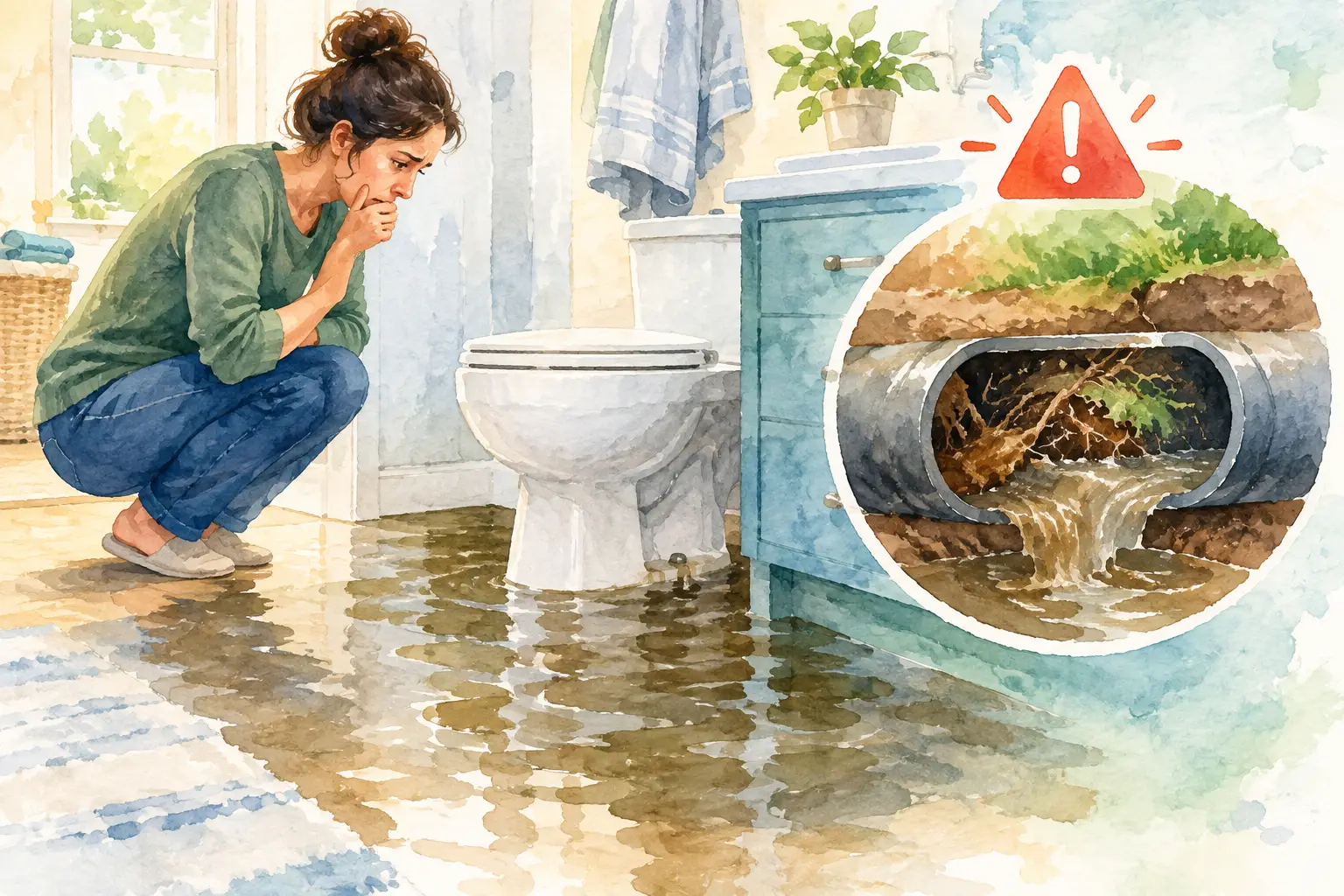
A toilet that bubbles when the washing machine drains is easy to dismiss as a strange one-time thing. It is also one of the sewer backup warning signs homeowners should take seriously. When a main sewer line cannot carry wastewater away from the house, the problem can move from odd noises to a messy, damaging backup faster than most people expect.
The good news is that early warning signs usually give you time to limit the damage. The right response is not to keep testing fixtures or pour more drain cleaner down the line. Stop adding water to the system, protect your home, and have a qualified plumber assess what is happening. No shortcuts when wastewater and your family’s living space are involved.
7 sewer backup warning signs homeowners should not ignore
1. More than one drain is slow at the same time
One slow bathroom sink can be a local clog caused by hair, soap, or toothpaste buildup. A kitchen drain that takes its time may have grease further down the branch line. But when several fixtures slow down together, especially fixtures in different rooms, the issue may be farther along in the plumbing system.
Pay close attention if toilets, showers, tubs, and sinks are all draining poorly. If the lower-level tub or shower is the slowest fixture in the home, that is even more concerning. Wastewater naturally looks for the lowest available exit when the main line is restricted.
2. Your toilet gurgles, bubbles, or changes water level
A toilet should flush, refill, and stay quiet. Gurgling after a flush, bubbles rising in the bowl, or water levels that suddenly drop or rise can mean air is being forced through the plumbing by a blockage. That pressure has to go somewhere, and the toilet bowl is often where you notice it first.
A single unusual sound does not guarantee a sewer issue. It could be a venting problem or a nearby drain obstruction. Still, if the sound happens repeatedly or starts when another appliance drains, treat it as a reason to schedule an inspection rather than waiting for a full backup.
3. Water comes up in a tub, shower, or floor drain
This is one of the clearest signs that you need help now. You flush a toilet and dirty water appears in the shower. The washing machine drains and water rises through a basement floor drain. That usually means the wastewater cannot continue through the sewer line and is being pushed back through a lower opening.
Do not run another cycle, take a shower, or flush again to see whether it clears. Shut off water use throughout the home as much as possible. Keep children and pets away from the affected area, since sewage can carry harmful bacteria. Call for emergency plumbing service right away.
4. You notice sewage odors inside or near the home
A sewage smell is never a household fragrance to live with. The odor can come from a dry floor drain trap, which is often a straightforward fix, but it can also point to a cracked pipe, blocked sewer line, or damaged sewer connection.
Notice where the smell is strongest. Odors near a basement bathroom, utility room, or floor drain deserve attention, especially when paired with gurgling or slow drainage. Smells outside near the sewer cleanout or along the yard can also signal trouble in the line between the house and the municipal connection.
5. The lowest fixtures back up first
Basement showers, tubs, toilets, and floor drains sit below most of the other plumbing fixtures in a home. They are usually the first places where backed-up water appears. A toilet on the main floor may still seem normal while a basement floor drain is already taking on water.
This is why a lower-level backup should not be handled as a minor drain inconvenience. Put towels or barriers around the area only if it is safe to do so, but do not try to contain a rising sewage backup while continuing to use water upstairs. The problem can escalate quickly.
6. Drains act up when water-heavy appliances run
Your dishwasher, washing machine, and even a long shower send a large volume of water into the drainage system at once. If a sewer line is partly blocked, the system may cope with small amounts of water but fail when one of these appliances empties.
Watch for a toilet bubbling while the washer drains or water collecting in a nearby sink after the dishwasher runs. This pattern helps distinguish a possible main-line issue from a clog isolated to one fixture. It also tells you to pause the appliance and avoid additional water use until the line is checked.
7. There are wet patches, unusually green grass, or a sunken area in the yard
Not every sewer problem happens indoors. A damaged or leaking underground sewer line can leave a soft, wet spot in the yard during otherwise dry weather. Grass may grow thicker or greener in one strip because leaking wastewater is feeding it. In more serious cases, soil can settle and create a dip along the route of the line.
Tree roots are a common culprit in older properties. Roots seek moisture, find tiny openings in pipes, and expand inside the line over time. Cold weather, shifting ground, aging materials, and past repairs can also affect underground pipes. A camera inspection can show what is actually happening without guessing or digging up a yard unnecessarily.
What to do when you spot sewer backup warning signs
First, stop putting more water into the drains. Do not flush toilets, run the dishwasher, use the washing machine, or take a shower. If the backup is active, turn off appliances that may discharge water automatically and let everyone in the home know what is going on.
Next, avoid contact with the wastewater. Wear gloves if you need to keep people away from the area, but do not attempt a major cleanup before the source is controlled. Sewage-contaminated water can affect flooring, drywall, stored belongings, and indoor air quality. Fast action can make a real difference.
Then call a licensed plumbing professional for an assessment. A proper visit may include checking the main cleanout, clearing an obstruction with the right equipment, and using a sewer camera to identify roots, grease buildup, scale, a collapsed section, or another issue inside the line. The best repair depends on the cause. Clearing roots may restore flow, but a cracked or badly deteriorated pipe may need a more permanent repair.
If sewage is overflowing or you cannot stop water from entering the home, call for emergency dispatch. For Calgary homeowners, that can be especially valuable during a busy household evening or a freezing-weather plumbing emergency. ValveOn Plumbing coordinates 24/7 help with licensed, insured professionals who explain the problem clearly and focus on the fix that makes sense for your home.
Can a sewer backup be prevented?
Some causes are preventable, while others are not entirely in a homeowner’s control. Never send wipes, paper towels, feminine products, dental floss, grease, or food scraps down toilets and drains. Even products labeled flushable can collect in a line and contribute to a blockage. Use drain strainers where they make sense, and dispose of cooking grease in a container rather than washing it down the sink.
For homes with mature trees, older sewer piping, or a history of drain problems, periodic camera inspections can be a smart preventive step. It depends on the property and the condition of the line. An inspection is not necessary every year for every home, but it can catch root intrusion and developing damage before a weekend backup forces the issue.
A backwater valve may also help protect certain homes from sewage flowing back from the municipal sewer during heavy conditions. It is not a cure for a clog in your own sewer line, and it needs proper installation and maintenance. A plumber can assess whether it fits your plumbing layout and local requirements.
A sewer backup rarely starts with a dramatic warning. More often, it starts with one gurgle, one slow drain, or water where it does not belong. Trust what your home is telling you, stop using water when the signs point to a main-line problem, and get clear answers before a small disruption becomes a much bigger cleanup.
Leave a Reply