

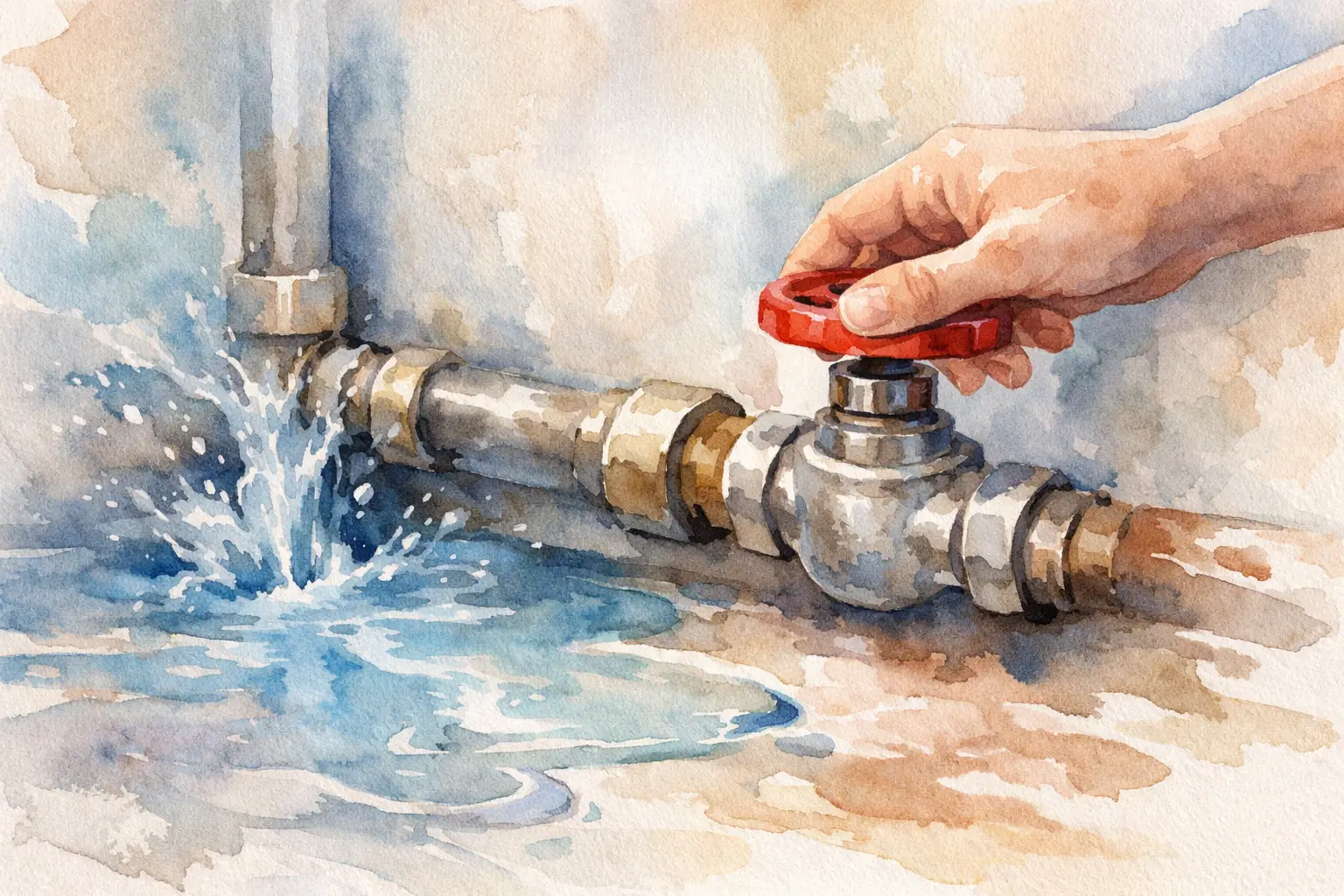
A burst supply line can put gallons of water into a home before you have time to find a mop. Knowing how to shut off water is one of those simple homeowner skills that can protect your floors, walls, furniture, and peace of mind. You do not need to diagnose the whole problem first. Stop the water, protect the area, then get the right repair underway.
The best valve to use depends on where the leak is coming from. A dripping toilet, a leaking faucet, and water pouring from a ceiling do not call for the same response. Here is how to act quickly without making a stressful situation worse.
How to shut off water at the main valve
Your home’s main water shutoff stops cold water from entering the plumbing system. In most homes, this is the fastest way to limit damage when you cannot identify the source of a major leak or when a pipe has burst.
Look for the valve where the water service line enters your home. In Calgary-area homes, it is often in the basement, utility room, mechanical room, crawlspace, or near the hot water tank. It may also be close to your water meter. If you live in a condo or apartment, the building may have a unit-specific valve, while the main building valve is usually managed by property maintenance.
You will usually find one of two valve styles. A round wheel-style gate valve needs several clockwise turns until it stops. A lever-style ball valve needs only a quarter turn. When the lever sits perpendicular to the pipe, the water is off. If it runs parallel with the pipe, the water is on.
Turn the valve slowly but firmly. Do not force a stuck or corroded valve. Older valves can fail when they are forced, creating a second leak where there was not one before. If the valve will not move and water is actively spreading, call for emergency plumbing dispatch right away.
Once the main supply is off, open a cold-water faucet at the lowest level of the home, such as a basement laundry sink. This relieves pressure in the lines and lets remaining water drain. Keep in mind that faucets may run briefly even after the supply has been shut off. That is normal.
Find it before there is an emergency
A calm Saturday morning is the right time to locate and test your main shutoff – not 2 a.m. with water reaching the hallway. Make sure every adult in the household knows where it is. If the valve is hidden behind storage, clear a path and consider labeling it.
Testing an older shutoff valve is useful, but it comes with a trade-off. A valve that has not moved in years may begin to seep after it is operated. If you notice corrosion, mineral buildup, stiffness, or drips around the handle, arrange to have it inspected and replaced before an emergency puts it to the test. No shortcuts. A reliable shutoff is part of protecting the whole home.
Shut off water to the fixture when the leak is contained
For a small, clearly contained leak, shutting off water to the individual fixture is often the better move. You can keep water available to the rest of the home while the repair is arranged.
A toilet has a small shutoff valve on the wall or floor behind the bowl, connected to the supply hose. Turn it clockwise until it stops. If the toilet is overflowing, first remove the tank lid and push the rubber flapper closed at the bottom of the tank. Then shut off the supply valve. Do not keep flushing to “check” whether it is fixed.
Under most kitchen and bathroom sinks, you will see two small valves: one for hot and one for cold. Turn off the valve feeding the leaking faucet, supply tube, or appliance connection. If you are unsure which line is involved, shut off both. Place a towel or container below the cabinet before touching anything, especially if you see moisture around a valve.
Dishwashers and refrigerator ice makers may have dedicated shutoffs nearby or under the kitchen sink. Washing machines typically have hot and cold valves behind the unit. If a washing machine hose is leaking or bulging, turn off both valves and avoid using the machine until the hoses and connections have been checked.
What to do with a leaking water heater
A water heater is different because it involves water, pressure, heat, and sometimes gas or electrical power. If you see water pooling around the tank, turn off the cold-water supply valve above the heater. It is often a lever or wheel valve on the pipe entering the top of the unit.
Do not drain a hot water tank unless you know why you are doing it and can do so safely. The water inside may be extremely hot, and sediment or a failing drain valve can complicate the situation. If there is significant leaking, popping sounds, steam, or water coming from the temperature and pressure relief valve, keep people away from the area and call a qualified plumber.
For an electric water heater, switch off power at the breaker before any service is performed. For a gas unit, do not attempt to work on the gas control or gas piping. If you smell gas, leave the home immediately, avoid switches or open flames, and contact your gas utility or emergency services from outside.
Boilers should receive the same caution. If a boiler is leaking, shut off the water supply only if you can safely identify the valve, then call for professional service. Heating systems have components that should not be guessed at.
If water is coming through the ceiling
Water stains, a sagging ceiling, or a steady drip from above can be alarming because the source is often hidden. Shut off the main water supply if the leak is active and you cannot isolate a nearby fixture. Then move furniture, electronics, and rugs away from the area.
If the ceiling is bulging with trapped water, do not stand directly beneath it or try to puncture it without considering what may be above. The water could be hot, contaminated, or close to electrical wiring. Turn off power to the affected area if you can do so safely from a dry location, and call for help. A plumber can identify whether the issue is a supply line, drain, roof leak, appliance connection, or another source entirely.
Four things to do after the water is off
Once the flow has stopped, the next few minutes still matter. Take these practical steps:
- Take photos and short videos of the leak, damaged materials, and the water level before cleanup begins.
- Use towels, a wet vacuum, or a mop to remove standing water when it is safe to do so.
- Keep cabinet doors open around wet plumbing to improve airflow, but avoid using fans near wet electrical outlets or cords.
- Call a plumber promptly if the leak came from a pipe, valve, water heater, ceiling, or anything you cannot clearly repair with a simple fixture adjustment.
For a minor faucet drip, you may be able to wait for a scheduled appointment. For a burst pipe, failed supply hose, overflowing fixture that will not stop, or hot water tank leak, waiting can be expensive. Water does not need much time to damage drywall, flooring, insulation, and belongings.
When not to turn the water back on
It is tempting to restore water as soon as the floor looks dry. Hold off if you do not know what failed, if a pipe has split, if a valve is dripping, or if water has reached electrical equipment. Turning the supply back on “just to see” can restart the leak with more pressure and more damage.
After a repair, open the main valve slowly. A sudden rush of water can create pressure shock in older plumbing. Check the repaired area and nearby connections for several minutes, then check again later in the day. Solid work that stands the test of time includes making sure the repair holds after the tools are packed away.
A working shutoff valve is a small detail until it saves your home from a big mess. If yours is seized, hard to reach, or showing its age, ValveOn Plumbing can help you get it assessed before the next leak turns urgent.
Leave a Reply