

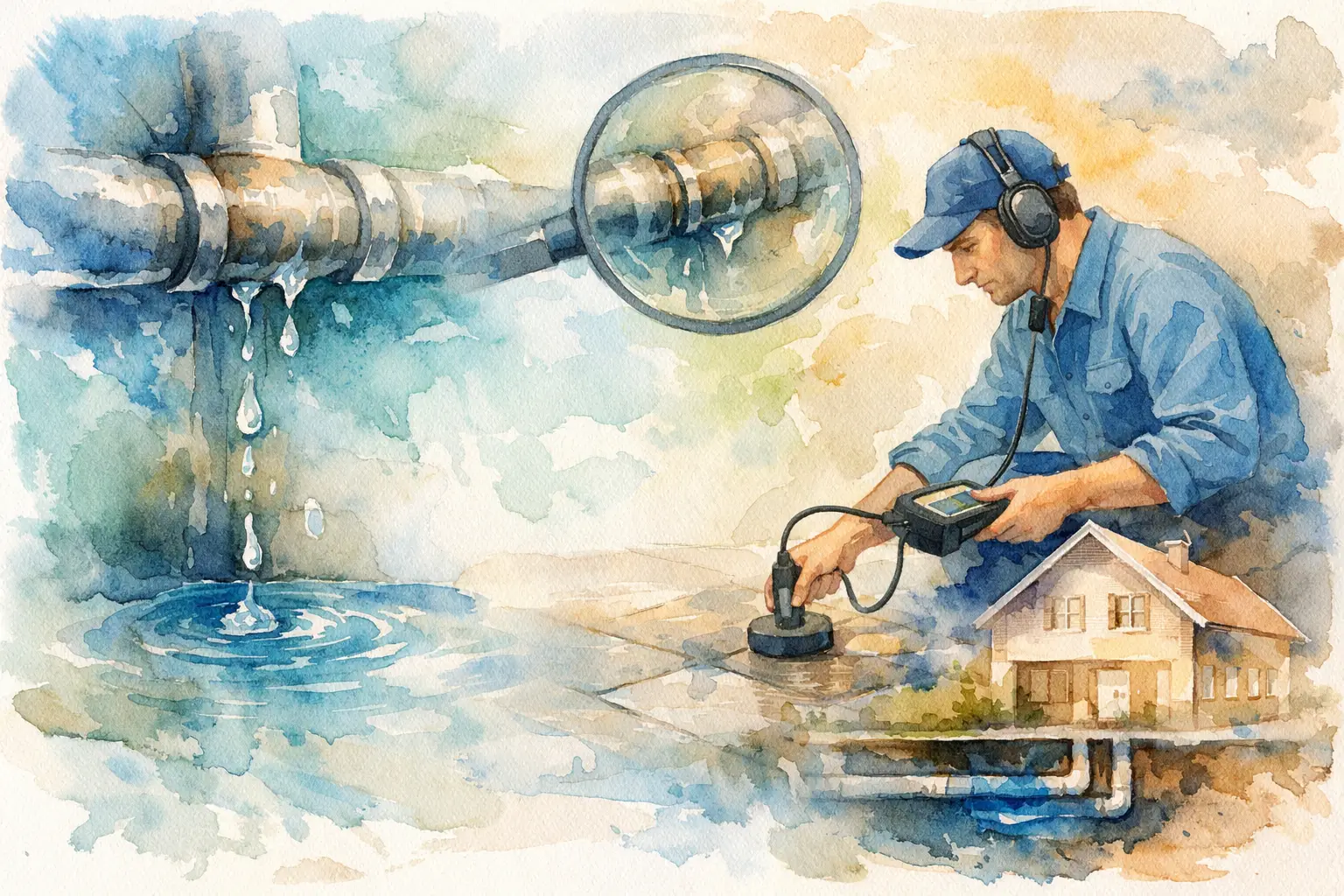
A hidden leak rarely announces itself with a dramatic burst pipe. More often, it starts with a warm patch on the floor, a faint musty smell behind a cabinet, or a water bill that makes no sense. Professional water leak detection services are built for those moments – finding the actual source before a small plumbing issue becomes damaged drywall, warped flooring, mold concerns, or a stressful insurance claim.
At ValveOn Plumbing, the goal is simple: assess the problem carefully, explain what is happening in plain language, and help you make a sound decision for your home. No shortcuts. No guessing at a repair that may not solve the problem.
When a Leak Is Not Obvious
Some leaks are easy to spot. A dripping faucet, a leaking toilet supply line, or water under the kitchen sink gives you a clear starting point. The harder problems are the leaks hidden inside walls, below concrete, under flooring, around tubs, or on water lines that only leak under certain conditions.
That is where water leak detection services earn their value. Rather than opening large sections of a wall or floor based on a hunch, a qualified plumber starts with a methodical inspection. The work may include checking water pressure, isolating sections of the plumbing system, inspecting visible connections, testing fixtures, and using specialized tools to narrow down where water is escaping.
The right approach depends on the home and the symptoms. A leak under a slab needs a different investigation than water appearing below an upstairs bathroom. Older Calgary homes may have aging supply lines or drain connections to consider, while newer homes can develop issues at fittings, appliance lines, or poorly sealed fixtures. The point is not to use every tool available. It is to use the right test for the evidence in front of us.
Signs You Should Call for Leak Detection
You do not need to see a stream of water to call a plumber. If something in your home feels off, it is worth checking before the damage spreads. Pay attention to these common warning signs:
- A water bill that rises without a change in household use
- The sound of running or hissing water when every fixture is off
- Damp carpet, soft flooring, peeling paint, or stained ceilings
- A musty odor near a bathroom, laundry room, basement, or kitchen
- Low water pressure that appears suddenly or affects one area of the home
- A hot water tank that seems to run more often than usual
One sign does not always mean a hidden pipe leak. Condensation, roof issues, appliance failures, poor caulking, and drainage problems can create similar symptoms. That is why diagnosis matters. We do not guess. We assess.
A water meter can offer an early clue
If you can safely access your water meter, turn off faucets, appliances, irrigation, and anything else using water. Then watch the meter indicator for several minutes. Movement may suggest water is still flowing somewhere in the system.
This is only a clue, not a final diagnosis. A meter test cannot tell you whether the problem is on a toilet flapper, an underground line, a water softener, or a pipe behind a wall. It also does not replace an inspection when moisture is already visible. If you suspect an active leak, especially near electrical outlets, ceilings, or a finished basement, call for service instead of waiting for more evidence.
How Professional Leak Detection Protects Your Home
The biggest benefit is not just finding water. It is limiting unnecessary damage while getting to the repair faster. A careful plumbing inspection can help separate a supply-line leak from a drain leak, determine whether a fixture or appliance is involved, and identify whether water is traveling from another part of the house.
That distinction affects both the repair and the cost. A failed toilet seal may require a focused repair. A leaking line behind a shower wall may call for targeted access and pipe replacement. A slab leak can require a more involved plan, with options explained based on pipe condition, accessibility, and the long-term reliability of the system.
There are trade-offs. The least invasive repair is not always the best lasting repair, particularly when old piping has failed in more than one area. Likewise, replacing a larger section of line can cost more upfront but may prevent repeat service calls. A dependable plumber should walk you through those choices clearly, with straightforward invoicing before work begins.
What Happens During a Leak Detection Appointment
A good appointment starts with your observations. When did you first notice the issue? Is the water clean, rusty, warm, or foul-smelling? Does it happen after showering, flushing, running the dishwasher, or using the washing machine? Those details help narrow the search and save time.
The plumber will then inspect accessible areas, including plumbing fixtures, shutoff valves, supply hoses, drains, and visible pipes. Depending on the concern, they may perform pressure testing, moisture readings, drain testing, or other non-destructive checks. If access to a concealed area becomes necessary, you should understand why, where access is needed, and what the next repair step will be.
Clear communication matters here. Hidden leaks are stressful because homeowners cannot see the full problem. You deserve updates before work moves from investigation to repair. A professional should explain the findings without burying you in jargon, give you practical options, and treat your home with care throughout the visit.
What to Do While You Wait for Help
If water is actively spreading, turn off the nearest fixture shutoff valve if you can identify it safely. For a larger or unknown leak, shut off the home’s main water supply. This is especially important if water is reaching finished rooms, electrical areas, or lower levels of the house.
Move furniture, electronics, rugs, and valuables away from the affected area. Use towels or containers to contain small amounts of water, but do not cut into walls, remove flooring, or start demolition unless you have been advised to do so. Water often travels away from the source, and opening the wrong area can add repair costs without solving the leak.
If the issue involves sewage, discolored water, a ceiling that is sagging, or a burst pipe, treat it as an emergency. Call for dispatch right away. Fast action can protect your family, your home, and the parts of your property that cannot be easily replaced.
Why Fast, Accurate Diagnosis Is Worth It
It is tempting to wait when the leak seems minor. But slow leaks can keep working around the clock. They may weaken materials, create conditions for mold growth, waste water, and turn a manageable plumbing repair into a restoration project. The longer water has to move through framing, insulation, cabinets, or flooring, the harder it becomes to limit the impact.
Fast service does not mean rushed service. It means showing up prepared, testing carefully, and giving you a clear path forward. ValveOn Plumbing coordinates licensed, insured plumbing professionals who respect your schedule, your budget, and the fact that this is your home – not just another service call.
If you are seeing stains, smelling moisture, hearing water where there should be silence, or facing a sudden jump in your water use, schedule an appointment or call now for emergency dispatch. Finding the source early gives your home its best chance at a smaller repair and a quicker return to normal.
Leave a Reply