

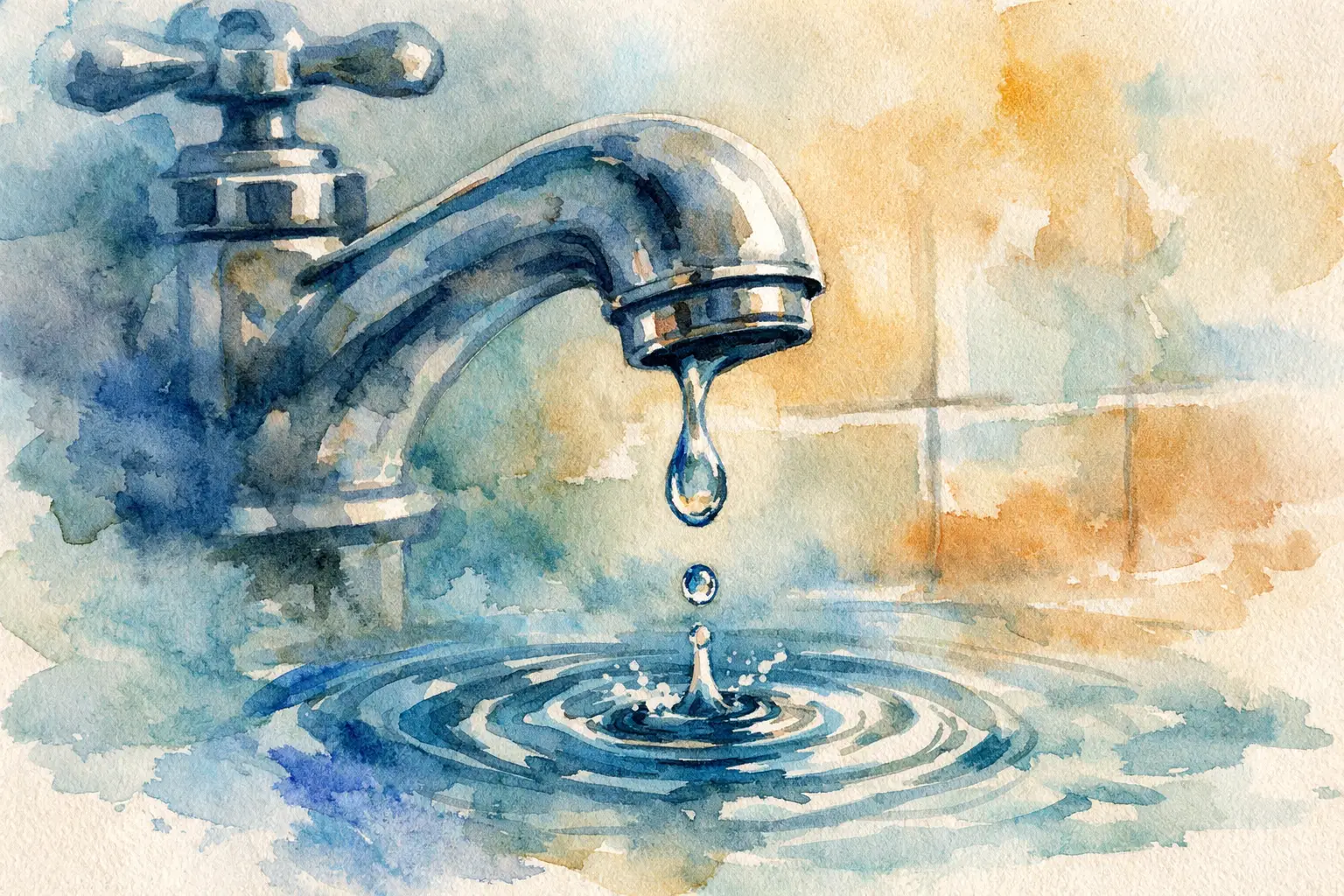
That little drip can become surprisingly loud at 2 a.m. More importantly, it is water and money going down the drain every day. Dripping faucet repair is often a straightforward job, but the right fix depends on what is leaking, the age of the fixture, and whether the problem is limited to a worn part or points to a bigger issue behind the sink.
A faucet should turn on easily, shut off completely, and stay dry around its base and handles. When it does not, you deserve a clear answer and a repair that lasts. No guesses, no mystery parts, and no shortcuts.
What Causes a Faucet to Drip?
Most drips begin inside the faucet, where small components control the flow of water. Each time you turn a handle, those parts press together to create a watertight seal. Years of use, mineral buildup, and normal wear can weaken that seal.
A worn washer is a common culprit in older compression faucets. These faucets usually have separate hot and cold handles that need to be tightened to stop the water. Over time, the rubber washer becomes stiff, cracked, or flattened, allowing water to slip past it.
Newer cartridge, ball, and ceramic-disc faucets have different internal designs, but they can fail too. A damaged cartridge, deteriorated O-ring, scratched valve seat, or buildup around ceramic discs can all leave you with a steady drip. Calgary homes can also see mineral deposits affect fixtures over time, particularly when a faucet has been in service for years.
The location of the water matters. A drip from the spout after the faucet is off usually means an internal sealing issue. Water appearing around a handle often points to a worn O-ring, packing nut, or cartridge. Water pooling at the base may be a seal issue, a loose connection, or a leak beneath the countertop that needs a closer look.
Is a Dripping Faucet an Emergency?
Usually, a slow drip from the spout is not a middle-of-the-night plumbing emergency. It is still worth addressing soon. Even a small, consistent leak can waste a meaningful amount of water over a month and leave mineral staining in the sink.
The situation changes if water is flowing from under the sink, soaking the cabinet, or spreading onto the floor. Shut off the local water valves beneath the sink if you can do so safely. Then dry up standing water and call for help. Cabinet damage, swollen flooring, mold growth, and damage to rooms below can cost far more than the original repair.
You should also treat it as urgent when a faucet will not shut off, the shutoff valve is leaking, or you notice a sudden loss of water pressure along with visible leaking. A 24/7 plumbing dispatch is there for the problems that cannot wait until morning.
When a DIY Fix Makes Sense
If you are comfortable with basic home repairs and the leak is minor, you may be able to handle a simple repair. The key is preparation. Before removing anything, shut off both hot and cold water valves under the sink. Open the faucet to release remaining water pressure, plug the drain so screws cannot disappear, and place a towel in the sink to protect the finish.
Take a photo of the faucet before you disassemble it, then take photos as each part comes off. Faucet hardware varies by manufacturer, and a picture can save a frustrating reassembly session. Once you identify the worn washer, cartridge, or O-ring, bring the old part with you when purchasing a replacement. Parts that look nearly identical can fit very differently.
A DIY repair is most reasonable when the fixture is accessible, the shutoff valves work properly, and replacement parts are easy to find. It is less appealing when corrosion has seized the hardware, the faucet is an older specialty model, or the leak appears to be coming from inside the wall or below the counter.
There is also a practical trade-off: replacing one small part can be economical, but repeated repairs on a worn-out faucet can add up. If handles are loose, the finish is peeling, the spout leaks at multiple points, or parts are discontinued, a new fixture may be the better long-term choice.
Dripping Faucet Repair Without the Guesswork
A professional repair starts with diagnosis, not a quick parts swap. A licensed plumber checks where the water is coming from, identifies the faucet type, tests the shutoff valves, and looks for damage that may not be obvious from above the sink.
That matters because a faucet drip can mask other concerns. A failed shutoff valve may be ready to leak when it is touched. Corroded supply lines may need attention. A loose faucet body can allow water to work beneath the countertop. If the faucet is part of a larger renovation plan, it may make sense to address aging supply connections while access is easy.
For a standard repair, the plumber may replace a cartridge, washer, O-rings, seals, valve seat, or other internal components. Afterward, they test the faucet under pressure, check hot and cold operation, make sure the handles move correctly, and inspect below the sink for drips. The goal is not simply to quiet the faucet for a day. It is solid work that stands the test of time.
ValveOn Plumbing coordinates licensed, insured professionals who explain what they find in plain language before work begins. You should know whether a repair is sensible, what replacement would involve, and what the invoice covers. Clear communication is part of the repair, especially when your kitchen or bathroom is already disrupting family routines.
Repair or Replace? Here Is How to Decide
Repair is often the right choice for a quality faucet with an isolated issue. If the faucet is relatively new, matches your space, and has readily available parts, replacing a cartridge or seal can restore reliable operation at a reasonable cost.
Replacement makes more sense when the faucet has recurring leaks, visible corrosion, damaged threads, failing handles, or discontinued internal parts. It can also be a good opportunity if you have wanted a pull-down kitchen sprayer, easier-to-use lever handles, or a finish that better fits an updated bathroom.
Do not choose a replacement based on looks alone. A good faucet needs compatible mounting holes, enough clearance behind the sink, appropriate supply connections, and a secure installation. In a kitchen, consider the spout reach and whether the handle can fully move without hitting a backsplash. In a bathroom, consider how the water stream lands in the basin. Small details make the difference between an upgrade you enjoy and one that creates a new annoyance.
How to Prevent the Next Leak
Faucets are mechanical fixtures, and eventually they wear out. Still, a few habits can help them last longer. Avoid forcing a handle closed. If you need to crank it down to stop a drip, the internal part is already asking for attention. Clean around the aerator and handle areas regularly, especially if mineral buildup is visible.
Pay attention to changes before they become a bigger repair. A handle that feels stiff, a faucet that squeaks, water collecting around the base, or a drip that returns after a temporary fix are all good reasons to schedule service. Catching a small problem early helps protect the cabinet, countertop, and flooring around it.
If a faucet is dripping tonight, start by checking whether the water is contained and whether the cabinet below is dry. If it is a simple spout drip, booking a repair soon can stop the waste and the noise. If water is escaping under the sink or the faucet will not turn off, shut off the local supply and call for dispatch. Your home should feel calm and cared for, not like it is keeping you awake one drop at a time.
Leave a Reply