
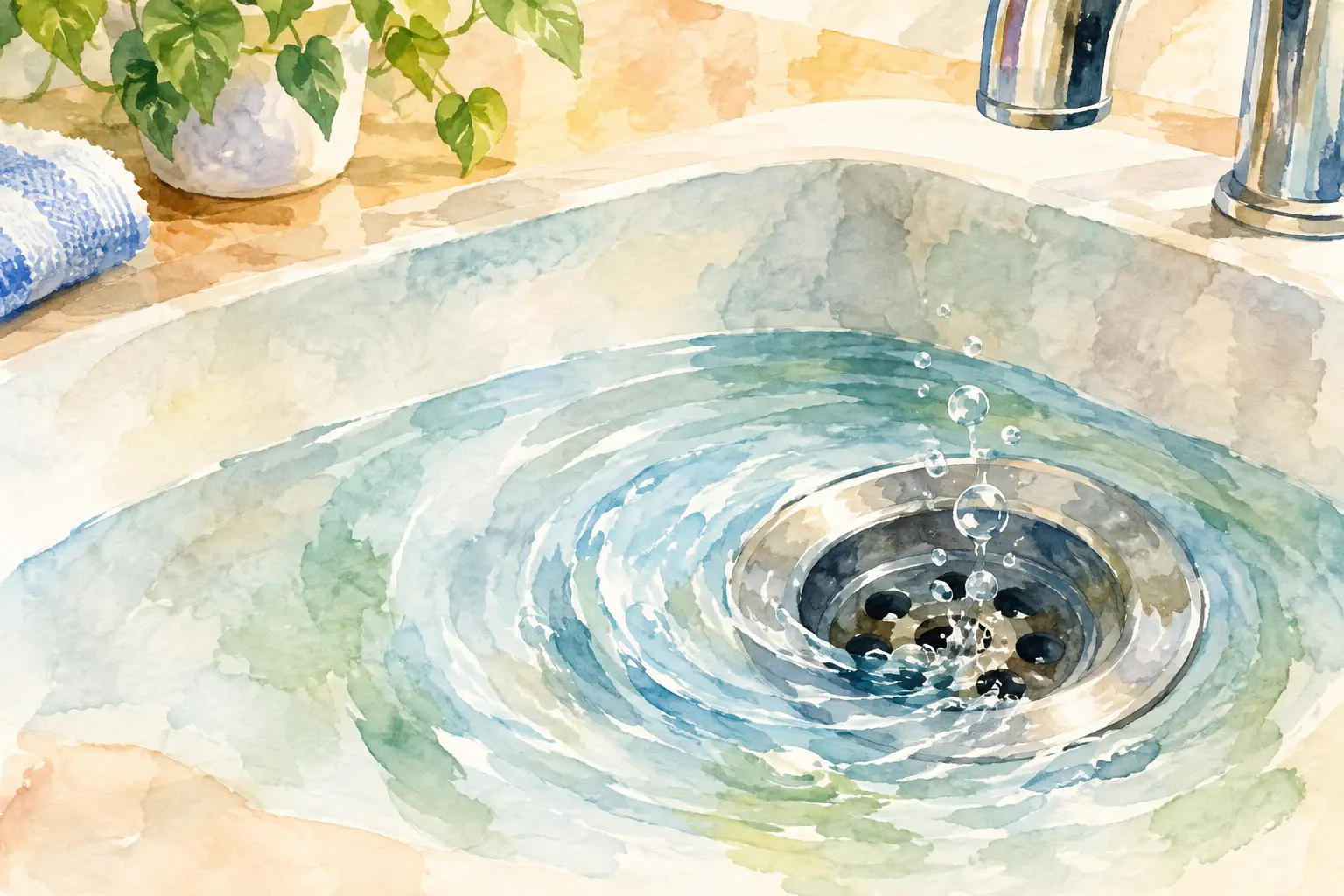
A gurgling drain has a way of making a normal evening at home feel less normal. If you typed “why does drain gurgle” after hearing bubbles in the kitchen sink, shower, or toilet, that sound is usually your plumbing telling you air is struggling to move where it should.
A drain system needs two things to work properly: a clear path for wastewater to leave and a clear path for air to enter behind it. When either path is restricted, water can pull air through a nearby drain trap, creating that familiar glugging or bubbling noise. Sometimes the fix is simple. Other times, the sound is an early warning before a slow drain becomes a messy backup.
Why Does a Drain Gurgle in the First Place?
Your home’s drain lines are designed to move water and air together. As water flows down a pipe, it needs replacement air so it can keep moving without creating a vacuum. Plumbing vents, which usually exit through the roof, provide that air.
When a clog, blockage, or vent issue interrupts the balance, air looks for another route. It may bubble up through standing water in a sink, bathtub, floor drain, or toilet bowl. That is the gurgle you hear.
The location and timing matter. One sink that gurgles only while it drains often points to a local issue near that fixture. A toilet that bubbles when the washing machine drains, or several fixtures that gurgle at once, can point to a blockage farther down the line. We don’t guess. We assess.
Common Reasons for a Gurgling Drain
A partial clog is slowing the water down
This is the most common cause. In a bathroom, hair, soap residue, toothpaste, and personal-care products can build up inside the trap or branch drain. In a kitchen, grease, food particles, and coffee grounds can narrow the pipe over time.
Water may still get through, just not freely. As it squeezes past the buildup, it can displace air and create bubbling noises. You may also notice water draining more slowly than usual or an unpleasant odor coming from the fixture.
A small, local clog is often manageable early. Waiting can turn that partial restriction into a complete blockage, usually at the least convenient moment.
The plumbing vent is blocked
A vent blockage can produce gurgling even when the drain pipe itself is relatively clear. Leaves, nests, debris, frost, or accumulated material can restrict airflow at the roof vent. Calgary’s freeze-thaw weather can add another variable, especially where snow and ice affect an exposed vent opening.
Because roof work and vent diagnosis carry safety concerns, this is generally not a job to tackle from a ladder. A licensed plumbing professional can inspect the system, identify whether the issue is truly vent-related, and clear it without risking damage to the pipe or roof.
A main sewer line is starting to clog
When multiple drains act up together, the concern is bigger than one sink trap. A developing blockage in the main sewer line can cause a tub to gurgle when a toilet flushes, a floor drain to bubble when the dishwasher runs, or water to rise in a low fixture.
Main line problems can happen because of grease buildup, flushed products that do not break down, a damaged pipe, shifting soil, or tree roots entering an older sewer line. The exact cause depends on the home and the line, which is why a proper inspection matters. Clearing a blockage without finding the reason it formed can lead to repeat calls and repeat stress.
The drain trap has lost its water seal
The curved pipe beneath a sink, or below a shower or floor drain, is called a trap. It holds a small amount of water that blocks sewer gas from entering the home. If a fixture is rarely used, that water can evaporate. In some cases, a strong suction issue from poor venting can also disturb the trap seal.
An empty trap may cause a gurgling sound and a sewer-like odor. For an unused sink or floor drain, slowly pouring a few cups of water down it may restore the seal. If the odor or noise comes back quickly, there may be an underlying venting or drainage problem worth checking.
Improper pipe slope or past installation work
Drain pipes rely on gravity, but they cannot be too flat or too steep. Incorrect slope, undersized piping, poorly placed fittings, or changes made during a renovation can interfere with drainage and venting. These issues are less common than a clog, but they deserve consideration when gurgling has been present since a renovation or seems to return despite repeated drain cleaning.
This is where no-shortcuts work matters. The answer may be a small adjustment, or it may require a more detailed evaluation of how the affected line was installed.
What You Can Safely Try Before Calling
Start by paying attention to the pattern. Run water in the affected fixture and listen. Then notice whether another fixture reacts. For example, flush the toilet only if the nearby tub or shower is empty and you can watch for rising water. If several drains gurgle, stop testing and avoid sending more water into the system.
For a single slow sink or tub, remove visible hair and debris from the stopper or drain opening. A plunger can also help with a minor clog, provided you use it correctly and cover any nearby overflow opening so pressure reaches the blockage. A hand-operated drain snake may work for accessible hair clogs in a bathroom sink or tub.
Avoid reaching for harsh chemical drain cleaners. They can damage older pipes, create fumes, and make a later repair more hazardous for anyone working on the drain. They also rarely solve a vent problem or a main sewer line issue.
If you have a floor drain that smells or gurgles but is otherwise unused, add water to restore the trap seal. A small amount of mineral oil after the water can slow evaporation, though it will not fix a drainage or venting issue.
When a Gurgling Drain Needs a Plumber Quickly
A single, occasional gurgle without slow drainage may not be an emergency. But certain combinations call for prompt service because the risk of a backup is real.
Call for help if water rises in a tub, shower, or floor drain when you flush a toilet or run another appliance. The same applies if sewage odors are strong, wastewater is backing up, multiple fixtures are draining slowly, or you have already tried a basic plunger without improvement.
If wastewater has entered your home, stop using water wherever possible. Do not run the dishwasher, washing machine, or additional sinks. Keep children and pets away from the affected area, and arrange emergency plumbing service. Fast action can limit water damage and help protect your home from a much larger cleanup.
How a Professional Finds the Actual Cause
A good drain repair starts with the symptoms, not a one-size-fits-all fix. A plumber may test fixtures, inspect accessible traps and drain lines, assess vent performance, and use specialized equipment to locate a blockage. For recurring or main-line concerns, a camera inspection can show what is happening inside the pipe, whether that is buildup, roots, damage, or a line that has shifted over time.
That diagnosis affects the repair. A small fixture clog may need a straightforward clearing. A main line may require drain cleaning equipment, while a damaged sewer line could need a targeted repair. Clear explanations and upfront options matter because homeowners deserve to know what is being fixed and why.
Keep Small Noises From Becoming Big Problems
The best prevention is simple, consistent care. Keep grease and food scraps out of kitchen drains, use strainers where hair is a problem, and never treat the toilet like a trash can. Only toilet paper and human waste belong there. Wipes labeled “flushable” can still contribute to blockages in real household plumbing.
For older homes or properties with a history of sewer issues, preventative drain maintenance can be worthwhile. It is not needed on a rigid schedule for every household, but it can make sense when roots, recurring slow drains, or heavy use are part of the picture.
A gurgling drain is not your home being dramatic. It is a signal to listen early, use water carefully, and get a clear diagnosis before a small air-and-water problem becomes a backup. ValveOn Plumbing is ready to help homeowners get the answer, the repair, and the peace of mind that comes with solid work that stands the test of time.
Leave a Reply