
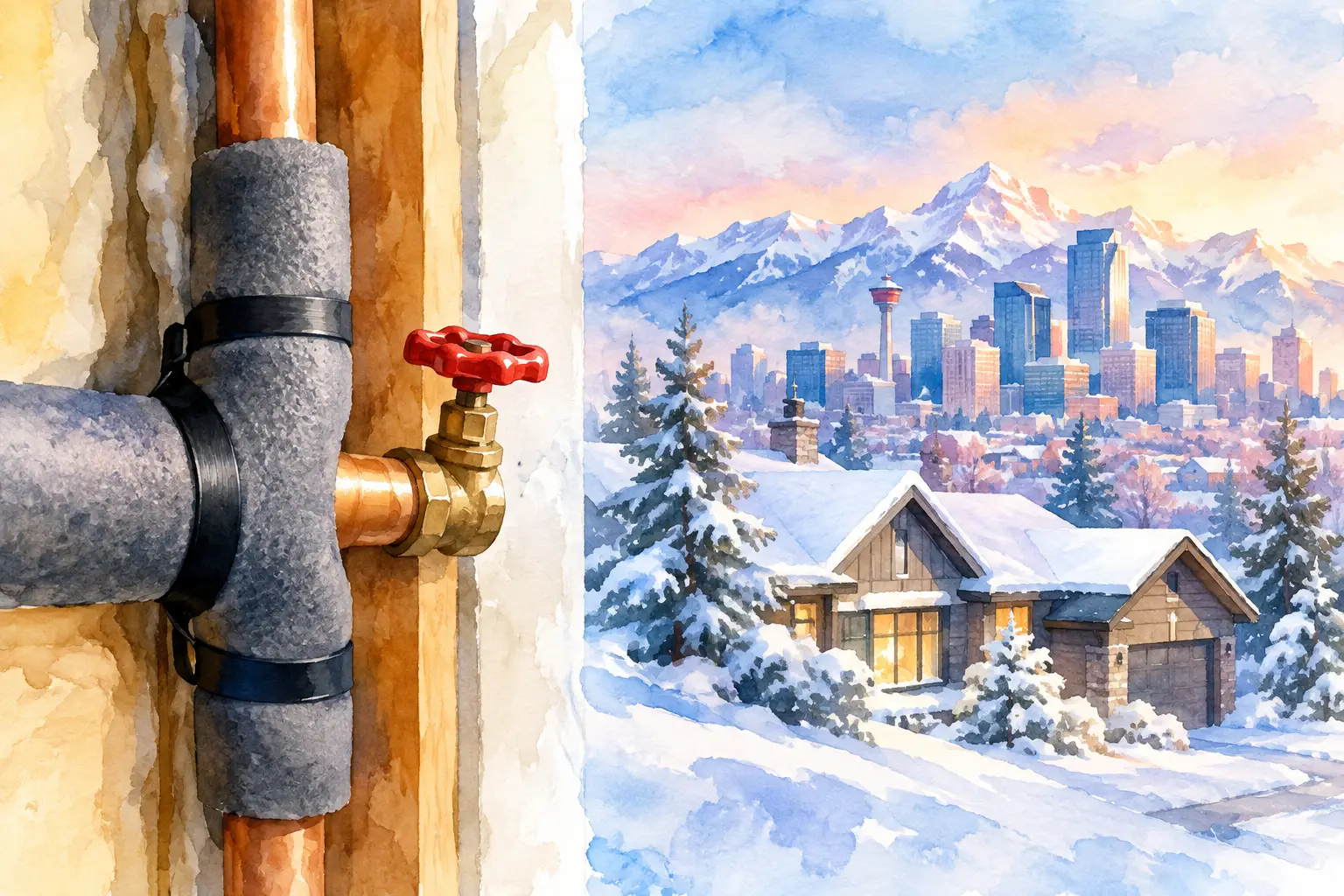
A Calgary cold snap can turn a small weak point in your plumbing into a major water-damage problem overnight. Frozen pipe prevention Calgary homeowners can rely on starts before temperatures drop, with a close look at the pipes that sit near exterior walls, garages, basements, and unheated spaces.
A frozen pipe does not always burst while it is frozen. The real danger often arrives during the thaw, when trapped water expands, a weakened section cracks, and water begins flowing behind a wall or across a finished floor. A few practical habits can reduce that risk significantly. When something does not look right, acting early is always less stressful than dealing with a flooded room.
Why Calgary Homes Face Frozen Pipe Problems
Calgary winters can be hard on residential plumbing because temperatures can drop quickly and stay low, while wind makes vulnerable areas of a home even colder. Pipes are most at risk when they are exposed to cold air or have little insulation around them. That includes pipes in unfinished basements, crawl spaces, attics, attached garages, utility rooms, and cabinets along exterior walls.
Older homes may have plumbing layouts that place water lines closer to cold surfaces. Newer homes are not automatically immune, either. A missed insulation detail, a draft around a penetration, or an unheated garage line can create the same problem.
Vacation plans and busy workweeks add another layer of risk. Turning the heat down too far to save money can cost far more if a pipe freezes. The goal is not to overheat your home. It is to keep the areas around your plumbing consistently above freezing.
Start With the Pipes Most Likely to Freeze
You do not need to inspect every inch of plumbing every week. Focus on the locations that have the greatest exposure to cold, drafts, or poor air circulation.
Begin with water lines under kitchen and bathroom sinks that sit against outside walls. Open the cabinet doors during severe cold so warmer household air can reach the pipes. Remove stored items that block airflow, especially large cleaning-product bins or tightly packed supplies.
Next, look at pipes in your basement mechanical room, garage, and any unfinished area. If you can feel a cold draft nearby, the pipes may be feeling it too. Check for obvious gaps where plumbing or wiring enters through an exterior wall. Sealing those gaps can help, but do not use a temporary patch as an excuse to ignore damaged insulation or a pipe that has already begun to leak.
Outdoor faucets deserve attention before winter settles in. Disconnect garden hoses, shut off the interior supply valve if one is available, and drain the outdoor faucet. A hose left connected can hold water at the faucet and increase the chance of freeze damage.
Keep Heat Consistent, Even When You Are Away
The thermostat is one of your best defenses. Keep your home heated to at least 55 degrees Fahrenheit, even if you are away for a weekend or longer. A lower setting may look appealing on an energy bill, but it leaves less room for error when outside temperatures fall sharply.
If parts of your home stay cooler than others, do not assume the central thermostat tells the whole story. A basement room, garage-adjacent bathroom, or isolated laundry area may be several degrees colder. Keep interior doors open where practical so heat can circulate. If you use a space heater, follow the manufacturer’s safety instructions and never rely on it as the only protection for plumbing in an unattended area.
For homes that are vacant for an extended period, consider asking a trusted neighbor or family member to check inside. A quick visit can catch a heating problem, an unusual draft, or a slow leak before it becomes an emergency.
Insulate Pipes, but Address the Cold Air Too
Foam pipe insulation is a useful, affordable layer of protection for exposed water lines. It is especially helpful around pipes in unfinished basements, crawl spaces, and utility areas. It slows heat loss, but it cannot compensate for a space that is freezing cold for days.
That distinction matters. If a pipe runs through an unheated garage or near a poorly sealed exterior wall, insulation alone may not be enough. The better solution may involve improving wall insulation, sealing air leaks, rerouting the line, or adding an approved heat-trace system. The right answer depends on the pipe location, the age of the home, and how often the area gets cold.
No shortcuts. A quick wrap can help in a mild situation, but chronic freezing calls for a lasting repair plan. A licensed plumbing professional can identify whether the issue is the pipe itself, the surrounding insulation, a draft, or a combination of all three.
Use a Small Water Flow Carefully During Extreme Cold
During a severe cold spell, allowing a vulnerable faucet to run at a small trickle can help keep water moving. This is most useful for pipes that have frozen before or for lines along an exterior wall that cannot be protected quickly enough in another way.
It is not a solution for every home or every faucet. Running water increases utility use, and a steady trickle will not fix a serious insulation problem. Think of it as short-term protection during unusually cold weather, not a substitute for proper maintenance.
Use cold water for this purpose unless a plumber advises otherwise. Many homes have hot-water lines that are vulnerable too, but continually running hot water can place unnecessary demand on the water heater. If both hot and cold lines are at risk, it is worth having the pipe location assessed before the next deep freeze.
Know the Early Signs of a Frozen Pipe
A frozen pipe rarely announces itself with a dramatic noise. More often, the warning signs are subtle: little or no water from a faucet, frost on a visible section of pipe, an unusually cold cabinet, or a strange smell from a drain because a trap or nearby line has frozen.
If water flow drops from one fixture while the rest of the home is normal, the problem may be isolated to that branch line. If multiple fixtures lose water, the issue could be larger. Either way, do not wait for the temperature to rise and hope for the best.
First, turn off the water supply to the affected fixture if you can safely identify it. If you cannot isolate the line, know where your home’s main shutoff valve is and make sure it is accessible. Moving boxes, storage, or furniture away from that valve before winter is a simple step that saves valuable time during an emergency.
What Not to Do When a Pipe Freezes
Never use an open flame, propane torch, or any device that could scorch a wall, damage a pipe, or start a fire. Pipes may be hidden behind insulation or close to combustible materials. Sudden, intense heat can also worsen damage to a stressed pipe.
Avoid cranking up a space heater directly against a wall or leaving it unattended. Do not chip at a frozen pipe or force a faucet handle that feels stuck. And if you see water, stains, bulging drywall, or hear water running where it should not be, skip the DIY experiment and shut off the water.
A careful approach matters because a pipe may already be cracked even if it has not started leaking. Thawing it without checking for damage can leave you with a surprise leak later that day.
When It Is Time to Call for Help
Call for professional plumbing help when a pipe has no water flow, when you cannot safely locate the frozen section, or when there is any sign of a leak. Fast action is especially important if the pipe is inside a wall, ceiling, or finished area where water can spread without being seen.
ValveOn Plumbing helps homeowners handle these stressful moments with clear updates and practical next steps. The focus is simple: assess the problem, protect the home, and complete solid work that stands the test of time. If a frozen pipe has burst, 24/7 emergency dispatch can help get the situation under control quickly.
Build Prevention Into Your Winter Routine
The best time to prevent a frozen pipe is before the forecast turns severe. In early winter, walk through the home, disconnect hoses, check exposed lines, confirm your main shutoff location, and make sure the heat is reaching rooms that tend to run cold. Then repeat a quick check when a major cold snap is expected.
A little attention now can protect more than pipes. It protects your floors, walls, belongings, and the calm of knowing your home is ready for the weather outside.
Leave a Reply