

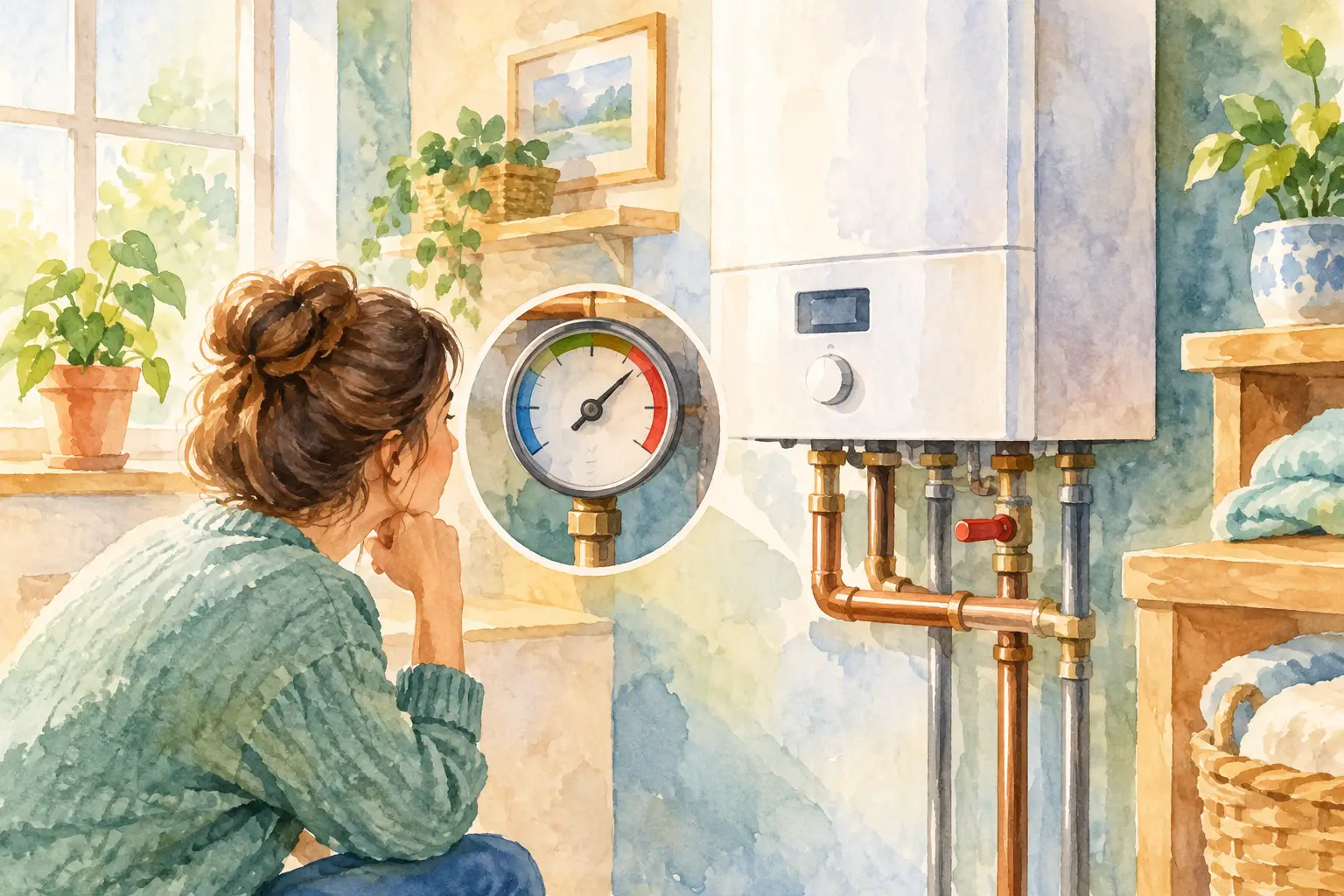
A boiler pressure gauge can look like a small detail until your home is cold, the system is making unfamiliar noises, or water is appearing near the unit. This guide to boiler pressure explains what the gauge is telling you, what you can safely check yourself, and when it is time to bring in a licensed professional. No guesswork. No risky fixes. Just clear next steps for protecting your heat, your home, and your family.
What boiler pressure means
Many home boilers use a sealed loop of water to carry heat through radiators, baseboard heaters, or in-floor heating. Boiler pressure is the force of that water inside the closed system. The gauge may show pounds per square inch (psi), bar, or both.
This is different from the water pressure at your kitchen faucet or shower. A boiler can have a heating-system pressure problem even if every tap in the house is running normally. It is also different from the pressure in a standard hot water tank.
When pressure is in the right range, heated water can circulate efficiently through the system. When it is too low, the boiler may shut down or struggle to heat your home. When it is too high, the system can release water through its safety valve or put unnecessary strain on components.
What is a normal boiler pressure reading?
For many residential boilers, a normal reading is around 12 to 15 psi when the system is cold. Once the boiler is running and the water warms up, pressure commonly rises to roughly 18 to 22 psi. Some systems use bar instead: 1 bar is about 14.5 psi.
Your boiler manual and the markings on its gauge should take priority, because equipment varies. Still, a reading that is consistently below about 10 psi or climbing toward 30 psi deserves attention. A pressure gauge sitting in the red zone is not a number to ignore.
A little movement between cold and hot is normal. A dramatic swing is not. For example, a boiler that starts at 12 psi and rises close to 30 psi whenever heat comes on may have an issue with its expansion tank or another component that needs proper diagnosis.
Your guide to boiler pressure checks
Before touching any valve, look at the boiler calmly and take note of what is happening. Is the pressure low only when the system is cool? Is it high only during a heating cycle? Is there water under the boiler, at a radiator, or coming from a pipe that exits outdoors? These details help narrow down the cause.
Check the pressure when the boiler is cold if possible. Record the reading, then check again after the heat has been running for a while. You do not need to remove panels or take apart the unit to gather useful information.
Also look for error codes on the boiler display. A code does not replace a professional assessment, but it gives the technician a better starting point. If you smell gas, hear a strong hissing sound, see active leaking, or notice a carbon monoxide alarm, leave the immediate area and arrange emergency help. Do not try to reset or repressurize the boiler first.
If boiler pressure is too low
Low pressure often means the sealed heating system has lost water. That loss can happen slowly through a tiny leak at a radiator valve, pipe fitting, circulating pump, or boiler component. It can also happen after radiators have been bled, after service, or through an issue with the pressure relief valve.
Some boilers have a filling loop or built-in filling valve that lets you add water back into the system. If your manual clearly identifies the valve and you have used it before, you may be able to refill the system gradually until it reaches the manufacturer’s recommended cold pressure. For many homes, that means stopping around 12 to 15 psi.
Open the valve slowly and watch the gauge the entire time. Once the target is reached, close the valve fully. Then monitor the pressure over the next day or two.
The trade-off is simple: restoring pressure can get the heat working again, but it does not fix the reason pressure dropped. If you need to repressurize more than once, do not make it part of your routine. Repeated filling adds fresh water and minerals to the system, and an ongoing leak can become a larger repair or a water-damage problem.
If boiler pressure is too high
High pressure can occur when the filling valve has been left open, allowing too much water into the system. It can also point to an expansion tank problem. The expansion tank gives heated water room to expand. Without that cushion, pressure can rise sharply as the boiler heats.
Do not keep adding water to a high-pressure boiler. Check that any accessible filling valve is completely closed, then turn off the heat if the gauge continues rising or approaches the red zone. Avoid opening random valves to release pressure. Hot boiler water can cause burns, and using the wrong valve can create a new leak.
If water is dripping from a discharge pipe, that can mean the pressure relief valve has opened to protect the system. It may stop once the boiler cools, but the cause still needs to be found. A relief valve that has discharged may not always reseal cleanly afterward.
Why boiler pressure keeps changing
A one-time low reading after radiator bleeding is often straightforward. Pressure that repeatedly falls or rises is a service issue, not a gauge issue. The most common causes include small leaks, a faulty pressure relief valve, a failing expansion tank, a malfunctioning filling valve, or air trapped in the heating system.
Older homes can be especially tricky because parts may have been repaired or replaced over many years. A new homeowner may not know where the system’s shutoff valves are, whether a previous repair changed the setup, or what pressure the boiler normally held. That is exactly when an inspection is worth more than trial and error.
In Calgary, long stretches of cold weather put heating systems under steady demand. A pressure problem that seems minor in mild weather can become urgent when your boiler is working hard to keep the house comfortable. Addressing unusual readings early gives you more options and helps avoid a no-heat call during the worst possible week.
When to call a plumber right away
Call for professional help if the boiler has no heat, repeatedly loses pressure, rises above its safe range, leaks water, or displays a persistent fault code. The same applies if you need to refill it frequently, hear banging or gurgling throughout the heating system, or find corrosion around valves and pipe connections.
A qualified technician can test the expansion tank, inspect the relief valve, find hidden leaks, check the fill assembly, and confirm whether the gauge is reading accurately. That matters because replacing a part without identifying the source of the problem is a shortcut that can cost more later.
ValveOn Plumbing coordinates licensed, insured professionals who explain what they find in plain language, provide clear invoicing, and treat your home with respect. For an active leak, a no-heat situation, or a boiler pressure issue that will not settle down, ask for prompt dispatch rather than waiting for the problem to grow.
A few habits that help boilers run better
Check the gauge occasionally during heating season, especially after a repair or power interruption. Keep the area around the boiler clear so you can spot leaks and so a technician can work safely. If your system has radiators, watch for cold spots, persistent air noises, or valves that show signs of moisture.
Annual maintenance is also a practical safeguard. A technician can inspect safety components and catch wear before it leaves you without heat. Maintenance is not about selling unnecessary work. It is about giving the equipment a fair chance to deliver solid work that stands the test of time.
Your boiler does not need constant attention, but it does deserve a response when its gauge starts telling a different story. A quick check today can keep a small pressure concern from becoming a cold, stressful night at home.
Leave a Reply