
Water can soak through a ceiling, spread beneath flooring, and damage cabinets long before a homeowner has time to search for tools. That is why this homeowner guide to plumbing emergencies starts with one priority: stop the flow safely, then get the right help moving. You do not need to diagnose every pipe or repair a failed fixture in the moment. You do need a clear plan that protects your home, your family, and the next person who steps through the door.
What Counts as a Plumbing Emergency?
Not every drip needs an after-hours dispatch. A faucet that slowly leaks into the sink can often wait for a scheduled repair. A toilet that runs occasionally may waste water, but it is usually manageable until regular service is available.
A plumbing issue becomes an emergency when it is actively causing damage, creates a health or safety concern, or takes away an essential part of your home. A burst pipe, overflowing toilet, sewage backup, major leak under a sink, failed hot water tank, or water coming through a ceiling deserves immediate attention.
In Calgary, cold weather adds another layer of risk. Frozen pipes can crack quietly, then release a surprising amount of water as temperatures rise. A home without heat or hot water can also become urgent quickly, especially when children, seniors, or vulnerable family members are involved.
The First 10 Minutes Matter Most
Fast action can make the difference between a repairable mess and a major restoration project. Stay calm, move carefully, and focus on containment rather than a permanent fix.
Shut off the water at the nearest source
If the leak is coming from a toilet, sink, or washing machine, look for the small shutoff valve on the supply line near that fixture. Turn it clockwise until it stops. Do not force a valve that feels seized. A brittle or corroded valve can break and make the problem worse.
If you cannot identify the source, the leak is heavy, or multiple fixtures are affected, turn off the main water supply to the house. Every homeowner should know where this valve is before an emergency happens. It is commonly located near the water meter, in a utility room, basement, crawlspace, or mechanical area.
For a leaking water heater, close the cold-water supply valve above the tank if it is safe to reach. Do not try to drain a hot water tank unless you understand the process and can do so without exposing yourself to scalding water.
Protect people before property
Water near outlets, appliances, extension cords, or an electrical panel is a serious concern. Avoid stepping into standing water if electricity may be present. If you can safely reach the electrical panel without crossing wet areas, turn off power to the affected section. Otherwise, keep people away and call for professional help.
A sewage backup requires extra care. Wastewater can contain harmful bacteria, so keep children and pets out of the area. Do not use the toilets, sinks, shower, dishwasher, or washing machine until the cause has been assessed. Adding more water to a blocked drain system can turn a contained backup into a much larger cleanup.
If you smell natural gas, hear hissing near a gas line, or suspect a gas appliance issue, leave the home immediately. Do not use switches, phones, or open flames indoors. Call emergency services and your gas utility from a safe location. That is not a plumbing repair to troubleshoot on your own.
Limit the spread of water
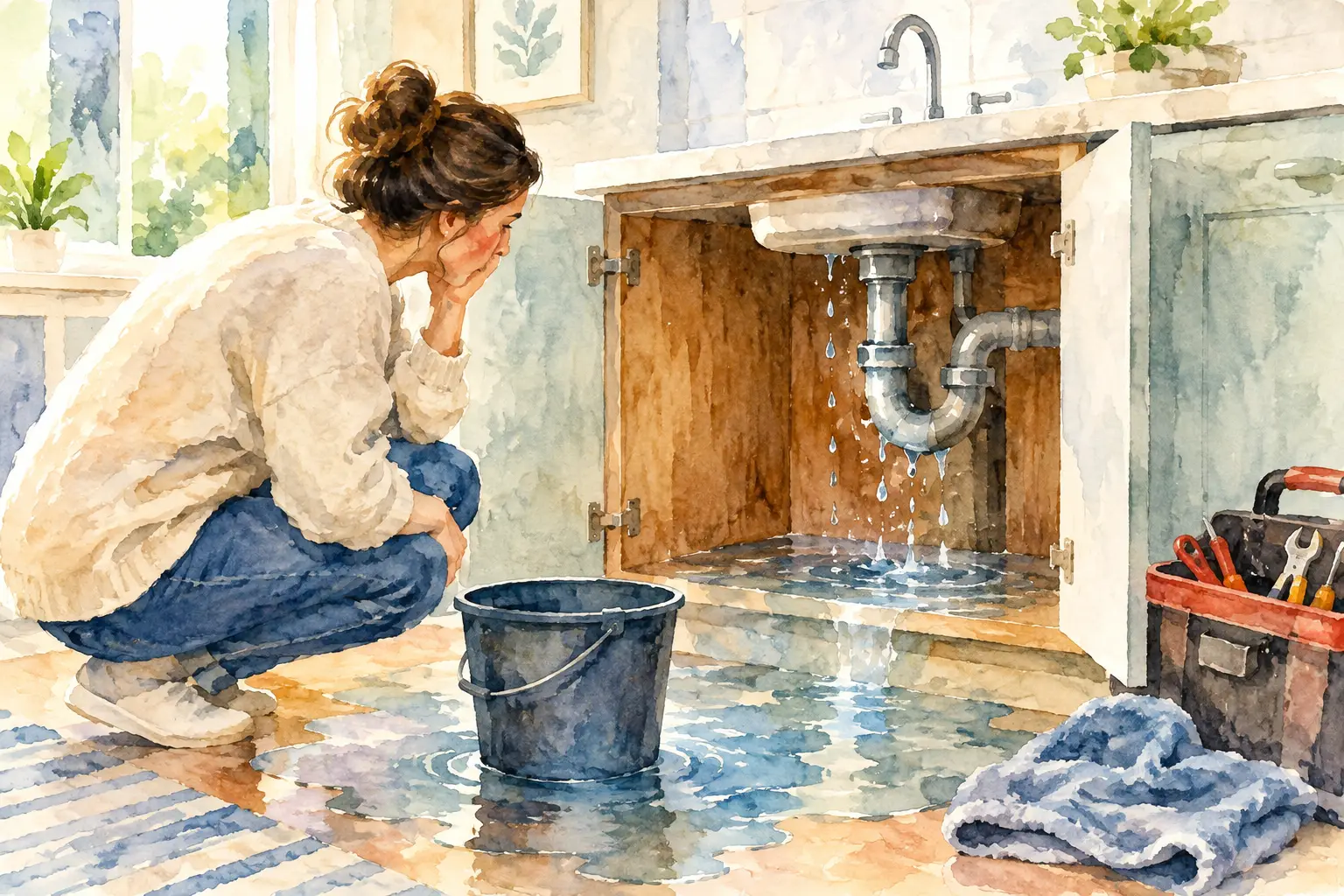
Once the water is off, move rugs, furniture, electronics, and stored belongings away from the wet area. Place towels or buckets where they can safely catch remaining drips. Open cabinet doors under sinks to help airflow, and take clear photos or video of the damage before cleanup if you may need to make an insurance claim.
Avoid tearing into walls, ceilings, or flooring in the rush to find the leak. Hidden plumbing problems need accurate diagnosis. Cutting into the wrong area can add unnecessary repair costs and may disturb wiring, insulation, or other building materials.
When a Quick Fix Can Wait – and When It Cannot
A little judgment goes a long way. If a faucet handle drips but the fixture shuts off fully, schedule a repair soon and place a container beneath it if needed. If a drain is slow but still flowing, stop using harsh chemical drain cleaners and arrange a service visit before it becomes a complete blockage.
Some problems look small but should not wait. A toilet that will not stop overflowing, a drain that sends dirty water back into a tub, or a ceiling stain that grows while water is running all point to an active issue. So does a water heater that is leaking from the tank itself. A failed temperature and pressure relief valve may be repairable, but a tank leaking from the bottom often signals internal corrosion and possible replacement.
No shortcuts apply here. Tape around a pipe, repeatedly plunging a stubborn main-line backup, or pouring chemicals into a blocked drain may buy a few minutes, but they can also hide the real issue or damage the plumbing system. The right response depends on what is failing and where the water is going.
What to Tell the Emergency Plumber
A good dispatch starts with useful details. You do not need plumbing vocabulary. Plain descriptions are enough: water is pouring from the ceiling below the upstairs bathroom, the toilet overflowed after flushing, or the hot water tank is leaking from the base.
Be ready to share whether the main water is off, whether water is near electricity, and whether sewage is involved. Let the plumber know which fixtures are affected, when the problem began, and whether anything happened just before it started, such as a washing machine cycle, a cold snap, or a renovation project.
Photos can help, but do not delay the call to document every detail. An emergency plumbing professional can assess the situation on arrival, explain the likely cause, and tell you what repair work is needed before moving forward. Clear communication matters when your home is disrupted. You should know what is happening, what can be done today, and what may require a follow-up repair.
Common Emergencies and the Right Immediate Response
A burst or frozen pipe calls for the main water supply to be shut off. Keep the home warm, open interior doors to circulate heat, and do not use an open flame to thaw a pipe. Gentle warmth from the room may help in minor cases, but a pipe that has split needs professional repair.
For an overflowing toilet, remove the tank lid and push the rubber flapper closed if it is still allowing water into the bowl. Then close the toilet shutoff valve. Do not keep flushing to test it. If the bowl is backing up because of a drain blockage, every extra flush increases the chance of contaminated water on the floor.
For a leaking sink or supply line, turn off the local valve and avoid using that fixture. A loose connection may be simple, but corrosion, cracked fittings, or failed shutoff valves can be part of the problem. Catching the drip is helpful. Assuming it is fixed because it slows down is not.
For no hot water, check whether the tank is leaking or whether there is a burning smell, unusual noise, or water around the unit. If any of those signs are present, turn off the water supply if safe and call for service. If there is no leak or safety concern, the issue may be a component failure, pilot issue, or power problem. It may still need prompt attention, but it is not always a middle-of-the-night emergency.
Prepare Your Home Before an Emergency Happens
The best time to find a main shutoff is not while water is running across the basement floor. Take a few minutes to locate it, test that household members know where it is, and make sure the area is accessible. Labeling the valve is a simple step that pays off under pressure.
Keep a basic response kit with towels, a bucket, work gloves, a flashlight, and the contact information for a trusted emergency plumbing service. If your home has older supply lines, recurring drain issues, a water heater near the end of its service life, or a history of freezing, preventative maintenance is worth considering. Small repairs and inspections can prevent a stressful call later.
When an emergency does happen, you deserve more than a quick patch and a confusing invoice. ValveOn Plumbing coordinates licensed, insured professionals who assess the problem, explain the work clearly, and treat your home with respect. The goal is simple: stop the damage, fix the cause, and help your household get back to normal.
A plumbing emergency is disruptive, but it does not have to leave you guessing. Shut off the water when you can, protect the area, and call for help early. Solid work that stands the test of time starts with a calm first response.
Leave a Reply