

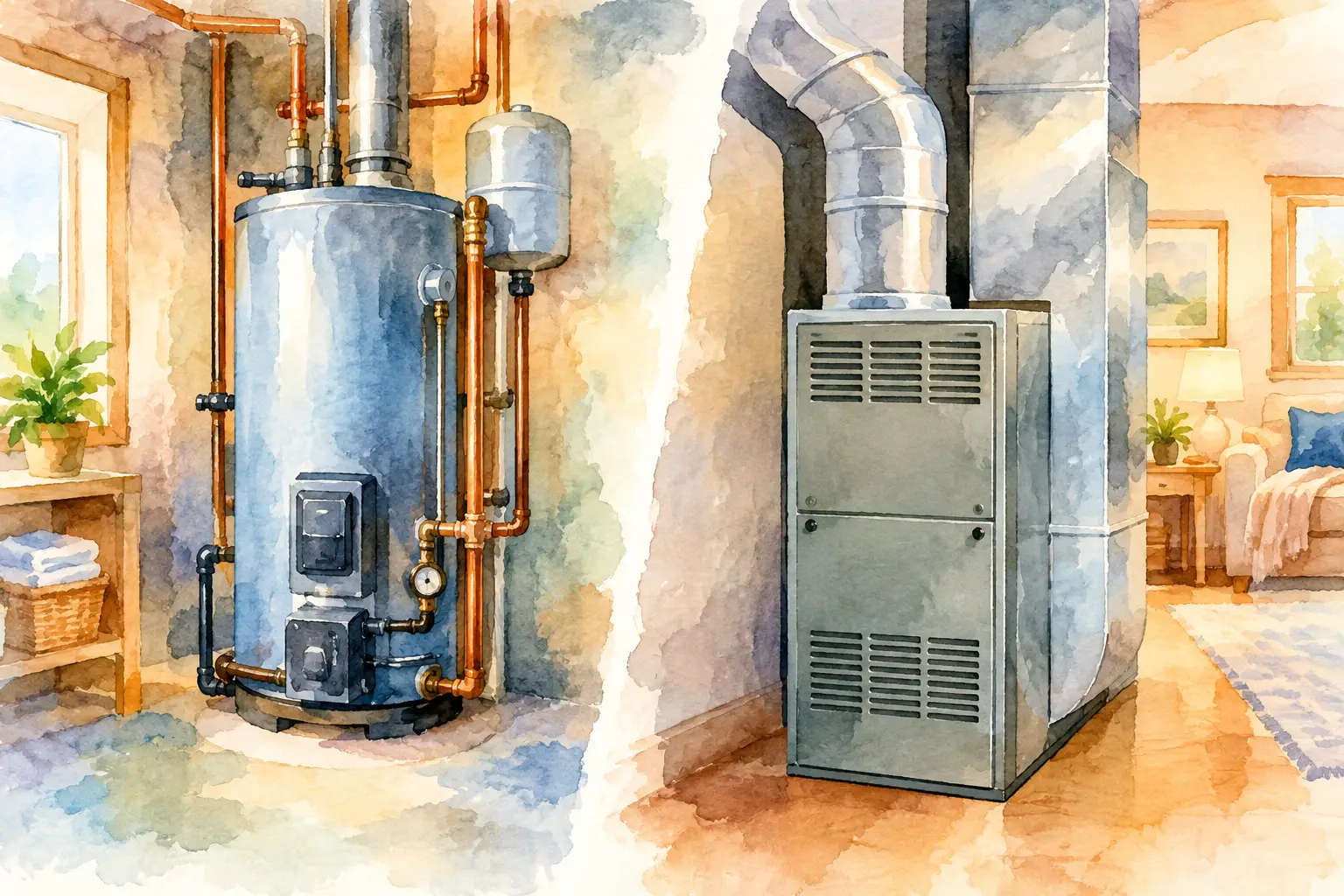
A heating system is easy to ignore until a Calgary cold snap turns one quiet problem into a very long night. When homeowners compare boiler versus furnace heating, the better choice is rarely about which system is “best” overall. It is about how your home is built, how you want rooms to feel, what equipment is already in place, and what you are prepared to maintain over time.
A furnace warms air and moves it through ductwork. A boiler heats water and circulates it through pipes to radiators, baseboards, or in-floor heating. Both can provide dependable heat when designed, installed, and serviced properly. The differences show up in comfort, repair needs, installation scope, and how easily each system supports the rest of your home.
Boiler Versus Furnace Heating: The Main Difference
A furnace is a forced-air system. Natural gas, electricity, oil, or another fuel heats an internal heat exchanger. A blower then pushes warm air through supply ducts and into each room. The same duct system can often be used for central air conditioning, filtration, humidifiers, and air purification equipment.
A boiler is a hydronic system, meaning it uses heated water. The boiler sends that water through closed-loop piping to radiators, baseboard heaters, wall units, or tubing under the floor. The water gives off heat, then returns to the boiler to be reheated. It is not the same as a standard water heater or hot water tank, although some homes use combination equipment for both space heating and domestic hot water.
The simplest way to think about it is this: furnaces heat the air; boilers heat surfaces and spaces through water. Neither approach is automatically more efficient or more comfortable in every house.
How Each System Feels in Your Home
Comfort is one of the biggest reasons homeowners lean toward a boiler. Radiant and hydronic heat tends to be steady and quiet. There is no blower turning on, no rush of air at a vent, and less noticeable temperature swing between cycles. In-floor heating can feel especially comfortable in bathrooms, basements, and entryways where cold flooring is a daily frustration.
Forced-air heating works faster. A furnace can raise the air temperature in a home relatively quickly, which many families appreciate after coming home from work or returning from a winter trip. It also gives you more direct control over airflow and can be paired with a central air conditioner without adding a separate cooling system.
There are trade-offs. Furnaces can move dust, pet hair, and allergens if filters are neglected or ducts are dirty. They can also make indoor air feel dry during a long heating season. Boilers avoid duct-borne airflow, but they do not provide central cooling. If you want air conditioning in a boiler-heated home, you may need ductless mini-splits or another dedicated cooling solution.
Efficiency Is About the Whole House
It is tempting to compare annual efficiency ratings and call the decision finished. Ratings matter, but they do not tell the whole story. A high-efficiency furnace or condensing boiler can reduce fuel use, but performance depends on proper sizing, installation quality, insulation, windows, thermostat settings, and the condition of ducts or piping.
A furnace loses some heat through ductwork, especially when ducts run through an unheated garage, attic, or crawlspace. Leaky ducts can also create uneven temperatures from one room to the next. On the other hand, a well-designed duct system can distribute heat effectively across a larger home.
A boiler can be highly efficient because water carries heat well and zoning is often easier to achieve. Separate zones let you reduce heat in unused bedrooms, a finished basement, or an area that gets plenty of afternoon sun. But older boilers, poorly insulated pipes, failing circulator pumps, or incorrect control settings can erase those advantages.
No shortcuts here: efficiency starts with a proper assessment. An oversized unit may cycle too frequently. An undersized unit may struggle in severe weather. The right answer comes from the home’s heat loss, layout, and existing infrastructure, not just the square footage printed on a real estate listing.
Installation Costs and Replacement Reality
If your home already has working ductwork, replacing a furnace is often less disruptive than converting to a boiler system. The ducts, vents, and thermostat wiring may already be in place. A furnace replacement still needs careful work around gas connections, venting, drainage for high-efficiency models, electrical components, and safe combustion setup, but the distribution system is usually established.
Installing a boiler in a home without hydronic piping can be a larger project. Pipes must reach each heating zone, and the home may need radiators, baseboards, or in-floor tubing. Opening walls and floors adds labor and planning, particularly in a finished home.
The reverse is also true. Converting a radiator-heated home to forced air can require new ducts, bulkheads, soffits, and wall openings. It may be possible, but it is not always the most practical use of a renovation budget.
For a major remodel or new construction, you have more freedom. In-floor boiler heat may make sense for a basement development, main-floor renovation, or bathroom upgrade. A furnace may make more sense when whole-home cooling, filtration, and simpler future access are priorities. Sometimes the best setup is a combination: hydronic floor heat in selected areas and another system for the rest of the home.
Maintenance and Common Trouble Signs
Both systems need regular attention, especially before winter puts them to work every day. A furnace generally benefits from routine filter changes, annual inspection, burner and heat exchanger checks, and confirmation that the condensate drain and venting are clear on high-efficiency equipment.
A boiler service visit may include checking system pressure, inspecting pumps and valves, confirming safe venting and combustion, testing the expansion tank, and looking for leaks or corrosion. Hydronic systems are quiet by nature, so new banging, gurgling, whistling, or uneven heat deserves attention.
Call for professional help promptly if you notice any of these issues:
- A furnace starts but blows cool air, short-cycles, or gives off unusual smells.
- A boiler loses pressure, leaks water, makes new noises, or leaves some rooms cold.
- Carbon monoxide alarms sound, a gas smell is present, or equipment has soot or scorch marks.
- Your heating bill rises sharply without a clear change in weather or usage.
For a gas odor or a carbon monoxide concern, leave the home if needed, call emergency services or the gas utility, and do not try to troubleshoot combustion equipment yourself.
Which Heating System Is Right for You?
Choose a furnace when your home already has good ductwork, you want central air conditioning, or you prefer a system that heats the air quickly. It can be a practical, familiar choice for many homes, particularly when the ducts are properly sealed and balanced.
Choose a boiler when you value quiet, even radiant heat, already have hydronic piping, or are planning a renovation where in-floor heat makes sense. Zoned heating can be a real advantage for larger homes, multi-level layouts, and rooms that are used differently throughout the day.
If you are replacing equipment after a failure, avoid making a rushed like-for-like choice simply because it is familiar. A failed boiler does not always mean a furnace conversion is wise, and an aging furnace does not automatically mean a boiler will solve every comfort issue. We don’t guess. We assess the layout, the existing system, the repair history, and what your household actually needs.
A heating decision should make your home easier to live in, not create new worries every winter. Whether you need help with a boiler concern, a water-side heating issue, or plumbing work around a renovation, ValveOn Plumbing focuses on clear answers, respectful service, and solid work that stands the test of time.
Leave a Reply