
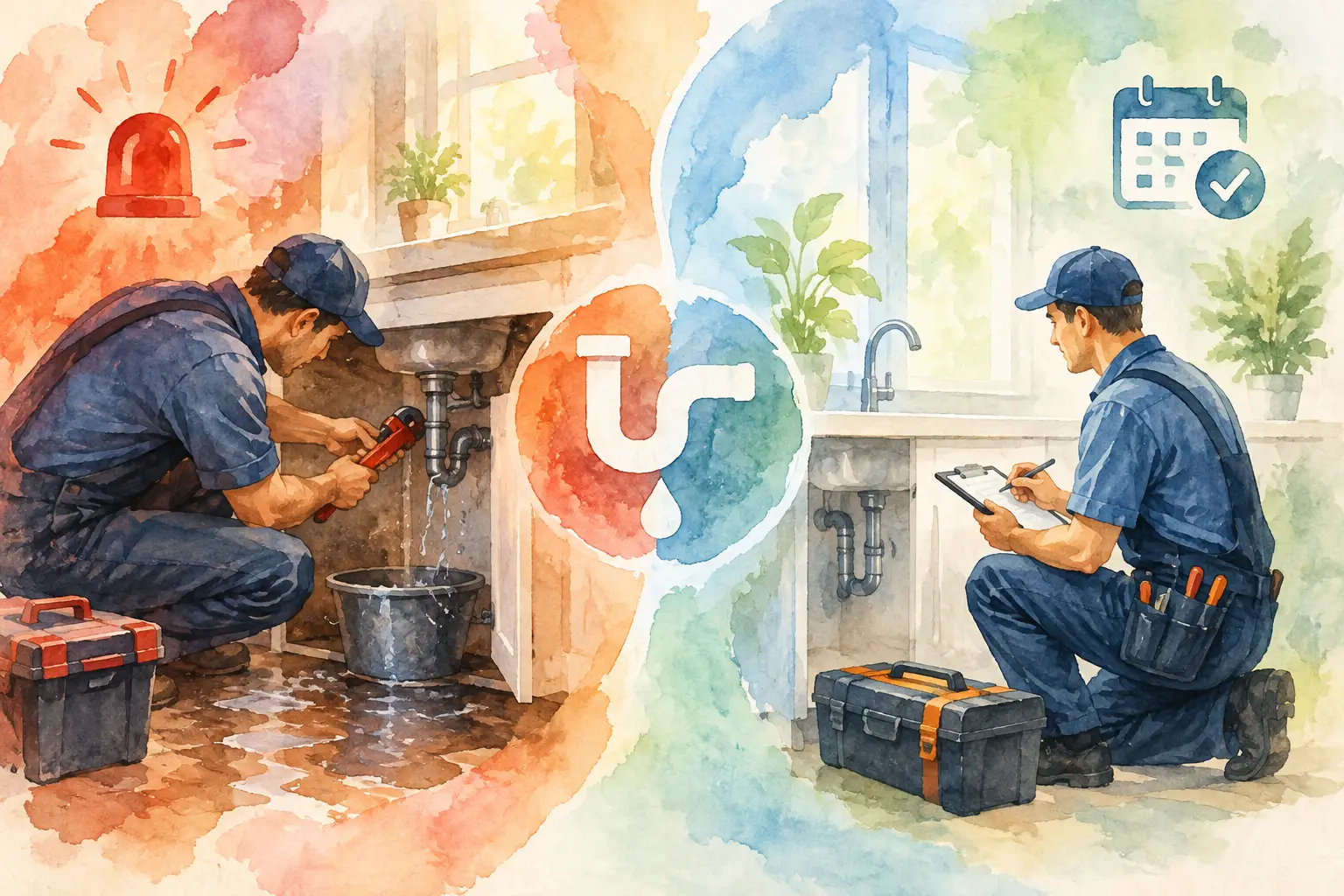
A pipe does not wait for a convenient time to burst. Neither does a water heater that quits on a freezing Calgary morning or a toilet that starts backing up just before guests arrive. Knowing the difference between emergency versus scheduled plumbing helps you act quickly when your home is at risk and avoid paying for urgent service when a planned appointment will do the job just as well.
The simple question is this: can the problem safely wait without causing damage, creating a health concern, or taking away an essential part of daily life? If the answer is no, call for emergency dispatch. If it can wait, scheduling service gives you more flexibility and a calmer path to a proper repair.
What Counts as a Plumbing Emergency?
A plumbing emergency is not just an inconvenience. It is a problem that can damage your home, create an unsafe condition, or leave your household without basic water or sanitation. In those moments, fast action matters more than waiting for regular business hours.
A burst or actively leaking pipe is a clear example. Water can travel behind walls, under flooring, and into ceilings faster than most homeowners expect. Even a small-looking leak can become costly if it runs for hours. Shut off the nearest fixture valve if you can do so safely. If the leak will not stop, turn off your main water supply and call for help.
A sewer backup also needs immediate attention. Wastewater coming up through a floor drain, tub, shower, or toilet is a sanitation issue, not a project to put off until next week. Keep people and pets away from the affected area, do not run water elsewhere in the house, and arrange emergency service.
Other situations that often call for a 24/7 plumber include a failed water heater with active leaking, no hot water during severe cold, a toilet overflow when it is the only working toilet in the home, or a major drain blockage that stops you from using sinks, showers, and toilets normally.
Emergency service is about limiting the damage and restoring safety. It may begin with stopping a leak, clearing an urgent blockage, or isolating a failed component. Once the immediate risk is under control, the technician can explain whether a follow-up repair or replacement is needed. No shortcuts. The goal is to protect your home first and provide a lasting fix next.
When Scheduled Plumbing Is the Better Choice
Not every plumbing issue requires a middle-of-the-night call. A scheduled appointment is usually the right choice when the problem is contained, stable, and not disrupting essential household use.
For example, a dripping faucet wastes water and can be frustrating, but it can generally wait if you can turn off the fixture or the drip is minor. The same often applies to a slow drain, a running toilet that is not overflowing, low water pressure at one faucet, or a garbage disposal that needs repair. These are real problems worth fixing, but they usually allow time to choose an appointment that works for your household.
Scheduled service is also ideal for planned work: replacing an aging hot water tank before it fails, installing a new fixture, arranging a plumbing inspection, connecting plumbing for a bathroom renovation, or addressing recurring drain issues. Planning ahead gives your plumber time to assess the system, source the right materials, and complete the work with less disruption.
There is a practical budget benefit as well. Emergency calls involve rapid dispatch outside normal scheduling windows. That availability is invaluable when water is pouring through a ceiling, but it is not necessary for a faucet upgrade or a drain that has been slow for months. When the issue can safely wait, booking ahead is often the more efficient choice.
Emergency Versus Scheduled Plumbing: A Quick Way to Decide
When you are standing in a wet utility room or staring at a stubborn toilet, it can be hard to think clearly. Ask yourself three questions.
First, is water actively leaking, overflowing, or backing up? Second, could the issue damage the home or create a health risk if it waits? Third, does the problem leave your household without a usable toilet, clean water, heat-related hot water, or another essential service?
If you answer yes to any of those questions, emergency plumbing is likely the right call. If the problem is annoying but contained, and you can still use your plumbing safely, schedule an appointment.
There are gray areas. A water heater that has stopped producing hot water may be manageable for one person on a mild day, but it can be far more urgent for a family with young children or during an Alberta cold snap. A slow drain might wait for a scheduled visit, unless several drains start gurgling or backing up at once. That can point to a main sewer line issue that needs faster attention.
When you are unsure, call and describe what you are seeing. A reliable plumbing team should help you understand the urgency without pressuring you into the wrong service level. Clear advice is part of good service.
What to Do Before the Plumber Arrives
A few calm steps can reduce damage and make the visit more productive. Start by finding your main water shutoff valve before an emergency ever happens. It is commonly located near the water meter, where the main line enters the house, or in a utility area. Every adult in the household should know where it is and how to operate it.
For a localized leak, shut off the valve beneath the sink or behind the toilet if possible. Place towels or a bucket beneath the leak, move electronics and valuables away from the water, and take a few photos for your records. Do not open walls, remove plumbing parts, or use chemical drain cleaners to force a solution. Those steps can make diagnosis harder and may cause additional damage.
For a sewer backup, avoid using any water in the home. Flushing a toilet or running a dishwasher can send more water toward the blocked line. For a suspected water heater leak, turn off the water supply to the unit if you know how, and keep clear of hot water or electrical components.
When you call, be ready to share where the problem is, when it started, whether water is still flowing, and what steps you have already taken. This helps the plumber arrive prepared.
Why Preventive Service Changes the Equation
The least stressful emergency is the one you never have. Plumbing inspections and preventative maintenance cannot prevent every surprise, but they can uncover warning signs before they become a Saturday-night flood.
Older supply lines, corroded shutoff valves, a water heater near the end of its service life, recurring drain clogs, and small ceiling stains all deserve attention. These are your home’s early signals. Addressing them during a scheduled visit gives you choices. You can plan the timing, understand the work, and make decisions before damage forces your hand.
This matters especially in homes with older plumbing systems, recently purchased homes with an unknown maintenance history, or households planning a kitchen or bathroom update. A professional assessment can show what is working well, what needs monitoring, and what should be repaired before it becomes urgent.
At ValveOn Plumbing, the approach is simple: assess the issue, explain the options clearly, and treat your home with respect. Whether it is an emergency dispatch or a planned repair, you should know what is happening and why before work moves forward.
The Right Call Is the One That Protects Your Home
You do not need plumbing expertise to make a good decision. You only need to recognize the difference between a manageable repair and a problem that threatens your home, health, or daily routine. Call for emergency help when water, wastewater, or essential service cannot safely wait. Schedule service when there is time to diagnose and repair the issue without added risk.
If a small problem has been asking for attention, listen to it now. A planned appointment today can protect your floors, your schedule, and your peace of mind tomorrow.
Leave a Reply