

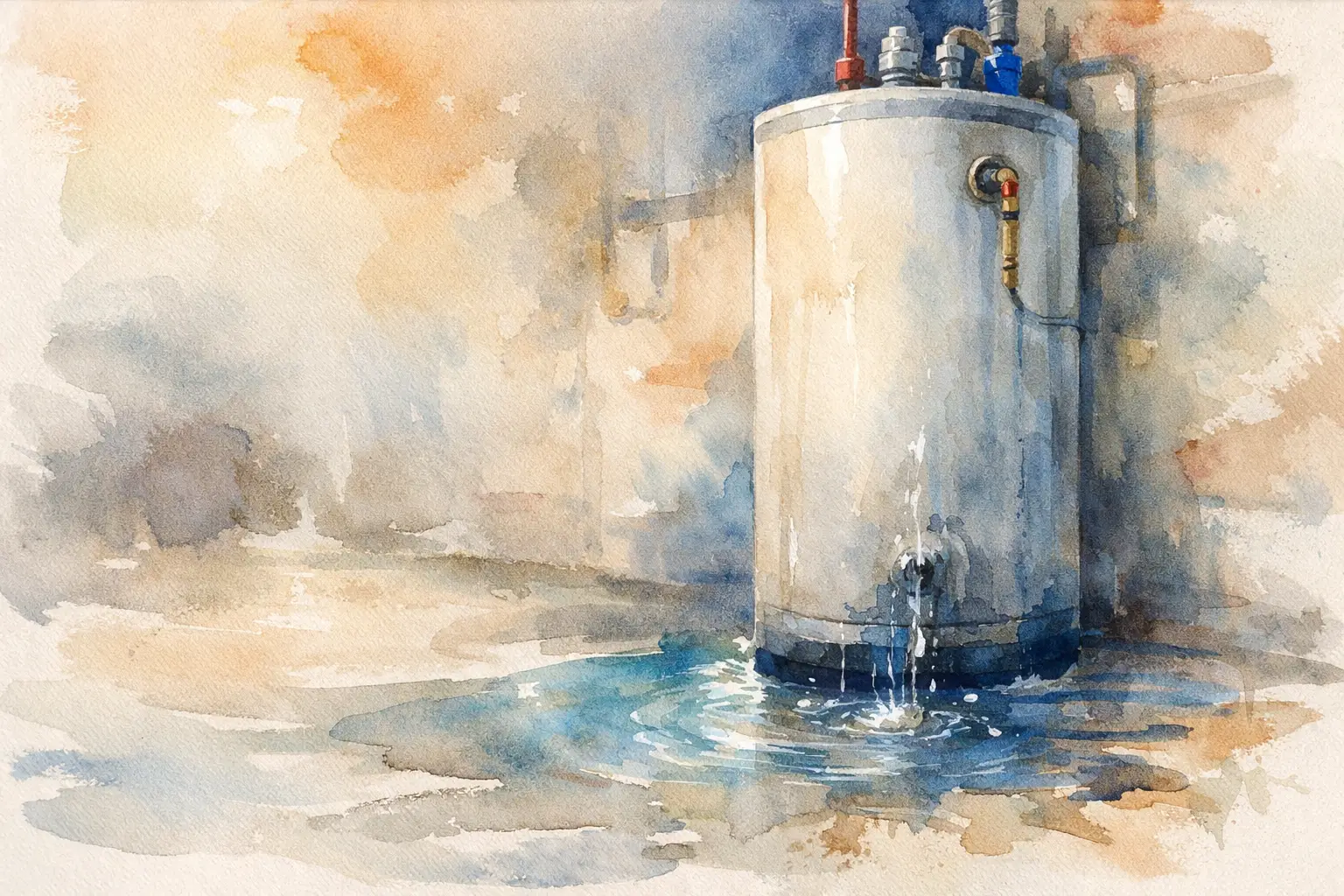
A hot water tank leaking is not a problem to put on tomorrow’s list. A few drops around the base may look harmless, but water can travel under flooring, soak drywall, and turn a manageable repair into a much bigger cleanup. The good news: a calm first response can protect your home while a licensed plumber identifies the real source.
Start by looking for active pooling water, then move anything stored nearby out of harm’s way. Do not assume the tank itself has failed until the leak is properly assessed. Condensation, a loose connection, a pressure-relief valve, or a nearby pipe can all leave water in the same spot.
First steps when your hot water tank is leaking
If water is actively escaping, turn off the cold-water supply to the tank. The shutoff valve is usually on the pipe above the unit. Turn a wheel-style valve clockwise until it stops, or turn a lever-style valve so it sits perpendicular to the pipe. This stops more water from entering the tank.
Next, turn off the power source. For an electric tank, switch off the correct breaker at your electrical panel. Never stand in water or touch electrical equipment if the area is wet. For a gas tank, set the control to the off position if you can do so safely. If you smell gas, hear hissing near a gas line, or feel uncertain, leave the area and arrange emergency help immediately. Do not try to troubleshoot a gas connection yourself.
Place towels, a bucket, or a shallow pan under a small, contained drip if it is safe to do so. Take a few clear photos of the leak and the surrounding area before moving too much. That information helps a plumber arrive prepared and can be useful if water damage needs to be documented.
If the leak is heavy, water is reaching finished areas of your home, or the tank is in a vulnerable location near electrical equipment, call for emergency plumbing dispatch. Fast action matters, especially in a Calgary home where a hot-water failure can quickly disrupt a family’s morning, evening, and everything in between.
Where is the water coming from?
The location of the leak tells part of the story. You do not need to diagnose it yourself, but a quick look can help explain the urgency when you call.
Water at the top of the tank
Water near the top often comes from the cold-water inlet, hot-water outlet, expansion tank connection, or a fitting on nearby piping. These issues may be repairable without replacing the tank, depending on the condition of the connections and the age of the unit. A loose fitting is very different from a corroded tank, which is why guesswork is not useful here.
Dripping from the temperature and pressure relief valve
The temperature and pressure relief valve is a safety device, usually mounted high on the side of the tank with a pipe running downward from it. An occasional discharge can happen, but repeated dripping deserves attention. The valve may be worn out, or the tank may be experiencing excessive temperature or pressure.
Do not cap, plug, or block this valve or its discharge pipe. That safety feature is there for a reason. A plumber can test the cause and recommend the correct repair rather than simply replacing a part that may not be the root problem.
Water around the drain valve
The drain valve sits near the bottom of the tank. It can drip because it was not fully closed after maintenance, because sediment has affected the valve, or because the valve itself has worn out. This can sometimes be a straightforward repair, but it is still worth having checked. A slow drip can damage flooring just as surely as a dramatic leak if it goes unnoticed long enough.
Water at the bottom of the tank
Water coming from underneath the tank is the concern homeowners least want to see. It can indicate corrosion or a crack in the tank’s internal liner. Once the tank body is leaking, patching the outside is not a lasting solution. Replacement is usually the practical path.
Before deciding that the tank is finished, a plumber should rule out water running down from a fitting, valve, or vent above it. We don’t guess. We assess. That distinction can prevent an unnecessary replacement or, just as importantly, prevent a failing unit from being left in service too long.
Is it a leak or just condensation?
In a humid utility room or basement, a cold tank can collect moisture on its exterior. Condensation usually appears as a light, even film of water rather than a steady drip from one point. It is more common when the incoming water is very cold and the surrounding air is warm or humid.
Still, do not write off a puddle as condensation without checking. Dry the outside of the tank and the floor around it, then watch for fresh water. If moisture returns at a valve, pipe connection, or seam, you likely have a leak that needs service. If you are unsure, having it inspected is the low-stress choice.
When repair makes sense and when replacement is smarter
A leaking connection, drain valve, or pressure-relief valve can often be repaired. The decision becomes less simple when the tank is older, has visible corrosion, produces rusty water, has inconsistent hot water, or leaks from the tank body. Repairs on a worn-out tank can buy a little time, but they do not always offer good value.
Tank age matters, but it is not the only factor. Water quality, installation conditions, maintenance history, and the demands of your household all affect lifespan. A newer tank with a failed valve may be well worth repairing. An older unit with internal corrosion is more likely to fail again, often at the worst possible time.
When replacement is needed, the right size and setup matter as much as the brand on the label. A tank that is too small leaves a busy household short on hot water. One that is oversized can cost more to purchase and operate. A qualified plumber can look at your household’s usage, fuel type, venting, available space, and existing plumbing before recommending a solution that fits.
Avoid these common mistakes
A leaking water heater is not the moment for a temporary fix that creates a safety issue. Avoid wrapping tape around a corroded tank, plugging a relief valve, or repeatedly reopening the water supply to see whether the leak has stopped. Those steps can make damage worse or hide a problem that needs immediate attention.
It is also tempting to drain the tank right away. That is not always the best first move. Hot water can cause burns, old drain valves can fail when disturbed, and a heavily leaking tank may need a more controlled approach. If water has been shut off and the area is safe, wait for professional guidance unless you have been instructed otherwise.
Finally, do not ignore a small leak because hot water is still available. Many tank failures start as a minor drip. Catching the problem early gives you more time to choose a repair or replacement instead of dealing with a flooded utility room on a weekend.
Get clear answers before the damage spreads
A water heater problem is stressful enough without confusing explanations or surprise decisions. ValveOn Plumbing coordinates licensed, insured professionals who can assess the leak, explain what failed in plain language, and provide straightforward next steps. Whether the answer is a focused repair or a full hot water tank replacement, the goal is solid work that stands the test of time.
If your tank is actively leaking, shut off the water if it is safe, protect the surrounding area, and arrange service right away. Your home deserves more than a quick patch. It deserves a fix that lets your family get back to warm showers, dry floors, and a normal day.
Leave a Reply