

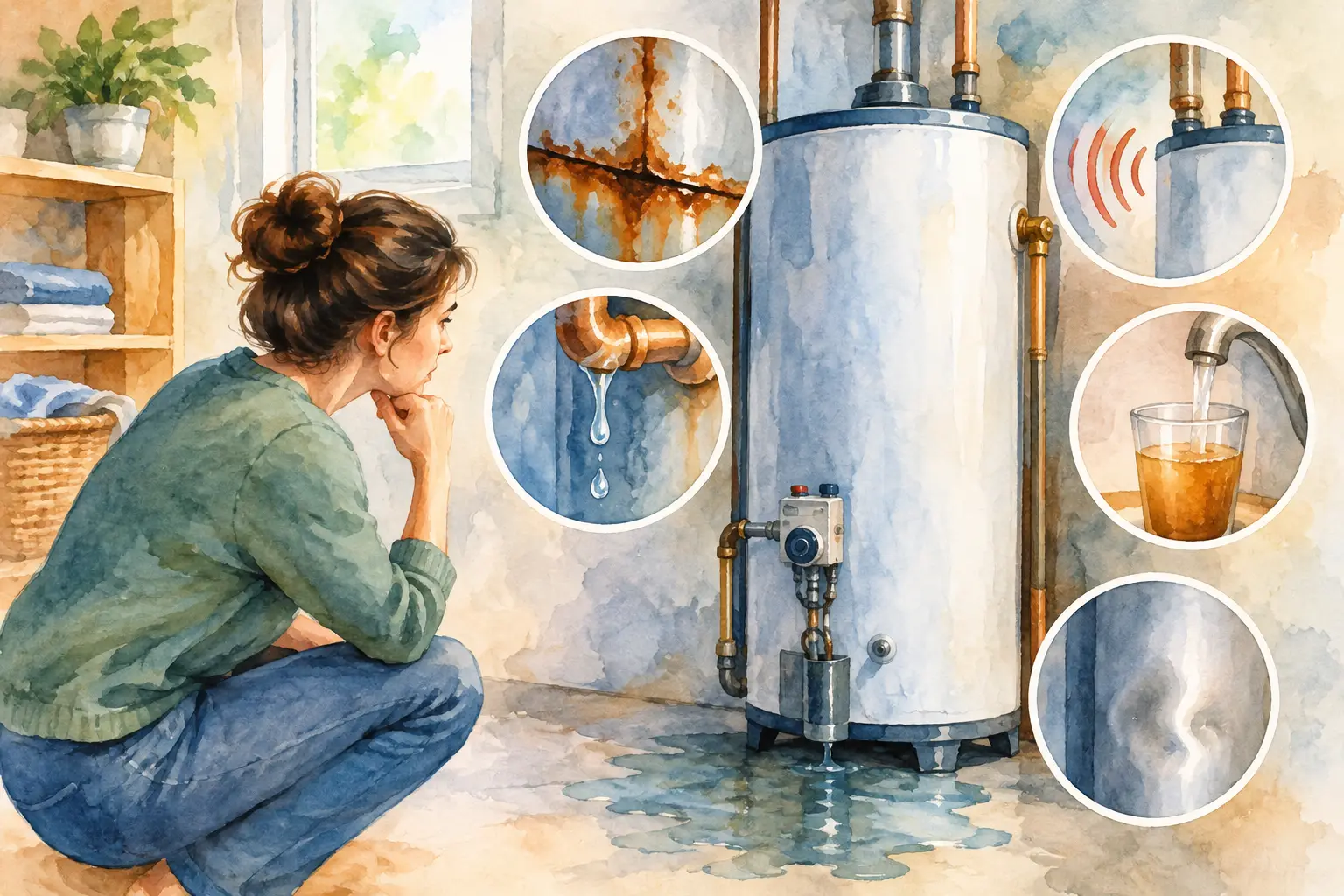
A cold shower is frustrating. A leaking water heater can become a much bigger problem, especially when water reaches flooring, stored belongings, or finished areas of your home. Your water heater works quietly every day, so warning signs are easy to overlook until there is no hot water left. Knowing what to watch for can help you act before a small repair turns into an urgent replacement.
Your Water Heater Usually Gives a Warning
Most water heater failures are not completely random. A tank can slowly corrode, a valve can begin to seep, or a heating component can lose efficiency long before the system stops working. The key is noticing the change and arranging service while you still have options.
If your hot water is inconsistent, pay attention to when it happens. A single lukewarm shower may be caused by heavy household use. Water that stays lukewarm, runs cold far too quickly, or takes much longer to heat back up points to a problem that deserves a proper assessment.
Strange noises are another common clue. A popping, rumbling, or crackling sound from a tank often means sediment has collected at the bottom. Minerals in the water settle over time, forcing the unit to work harder to heat through the buildup. In some cases, flushing and maintenance can help. In others, especially with an older tank, the sediment has already contributed to reduced efficiency or damage.
Discolored hot water should not be ignored either. Brown, rusty, or cloudy water can come from corroding parts inside the tank or from plumbing pipes. If the discoloration appears only when you use hot water, the water heater is a likely place to start. A licensed plumber can identify the source without guessing or recommending a replacement before it is truly necessary.
Leaks Need Fast Attention
Not every puddle beside a water heater means the tank has failed. Condensation, a loose connection, or a leaking temperature and pressure relief valve can leave water around the unit. But water has a way of finding the lowest point in a home, and even a small leak can create damage if left alone.
Start by looking for obvious moisture around the base of the unit, supply lines, drain valve, and nearby fittings. Do not remove panels or attempt repairs around gas, electrical, or pressurized components. If the leak is active, shut off the water supply to the heater if you can do so safely and call for service.
A leak from the tank itself is more serious. Once the internal tank has rusted through, it cannot be reliably repaired. Replacement is usually the right answer. Waiting can mean a larger leak, water damage, and a much more stressful day for your household.
When It Is an Emergency
Call for immediate help if you smell gas near a gas water heater, hear hissing around the gas line, see significant water flowing from the tank, or notice water near electrical equipment. Leave the area if there is a gas smell and avoid switches, flames, or anything that could create a spark. For a major active leak, protect your home by shutting off the water supply when safe to do so.
A complete loss of hot water is not always an emergency, but it can be urgent for families, renters, and homes during a Calgary cold snap. Fast diagnosis matters. The issue may be a pilot light, thermostat, heating element, igniter, valve, or another serviceable component. We do not guess. We assess.
Repair or Replacement Depends on the Whole Picture
Homeowners often ask whether they should repair a water heater or replace it. The honest answer is that it depends on the unit’s age, condition, repair history, fuel type, and the cause of the problem.
A newer unit with a faulty part may be well worth repairing. Replacing an element, thermostat, valve, or ignition component can restore dependable hot water without the cost of a new installation. A tank with visible corrosion, recurring leaks, or a history of repeated breakdowns is a different story. Putting more money into a failing unit may only delay the replacement you already need.
Age is a useful guide, not a final verdict. Traditional tank-style heaters often last around eight to 12 years, though water quality, installation quality, maintenance, and household demand all affect their lifespan. Check the manufacturer label for the model and serial number. A plumber can help determine its approximate age and whether the system is nearing the end of its practical service life.
Replacement can also make sense when your household has outgrown the unit. If hot water regularly runs out during normal morning routines, the existing tank may be undersized, or it may no longer be heating at full capacity. An accurate recommendation considers the number of bathrooms, household size, fixtures, laundry habits, and the type of energy available in the home. Bigger is not automatically better. The goal is enough reliable hot water without paying to heat more water than your family needs.
Choosing the Right Type of Water Heater
A standard storage-tank water heater remains a practical choice for many homes. It is familiar, dependable, and often more straightforward to replace when the existing plumbing and venting are in good condition. The trade-off is that it stores a limited amount of hot water, and it continues using energy to maintain that stored supply.
Tankless water heaters heat water as it passes through the system. They can provide a continuous supply when sized and installed correctly, and they do not keep a large tank of water hot all day. However, they require careful sizing, and an upgrade may involve changes to gas supply, venting, electrical service, or plumbing. A tankless system is not a universal fix for every home.
Electric, gas, high-efficiency, and hybrid options each come with their own requirements. The best choice should fit your home’s infrastructure and your family’s actual use, not just a product label or a one-size-fits-all sales pitch. Solid work starts with the right diagnosis and a clear explanation of the options.
Small Habits That Help Your System Last
Water heaters do not need constant attention, but simple maintenance can make a difference. Keep the area around the unit clear so a technician can access it safely. Look occasionally for moisture, corrosion, and changes in performance. If your home has a temperature and pressure relief valve discharge pipe, make sure it remains unobstructed and has not been capped or altered.
Periodic professional maintenance can address sediment, inspect connections, test safety components, and catch concerns that are difficult to see from the outside. The right schedule depends on your system, water conditions, and manufacturer guidance. Homes with hard water may benefit from more frequent attention because mineral buildup can develop faster.
It is also wise to know where the water shutoff is before there is a problem. A few calm minutes spent locating it now can save valuable time during an active leak. If you are unsure which valve controls the water heater or the home, ask during your next plumbing appointment.
Get Clear Answers Before the Problem Grows
A water heater problem should not leave you sorting through confusing advice, surprise charges, or vague promises. Whether the issue is a noisy tank, rusty water, a slow leak, or no hot water at all, a professional assessment should explain what failed, what can be repaired, and when replacement is the smarter long-term choice.
ValveOn Plumbing helps homeowners get back to normal with clear communication, licensed service, and workmanship built to last. No shortcuts. If your water heater is showing warning signs, schedule service before a manageable repair becomes a cold, wet emergency.
Leave a Reply