

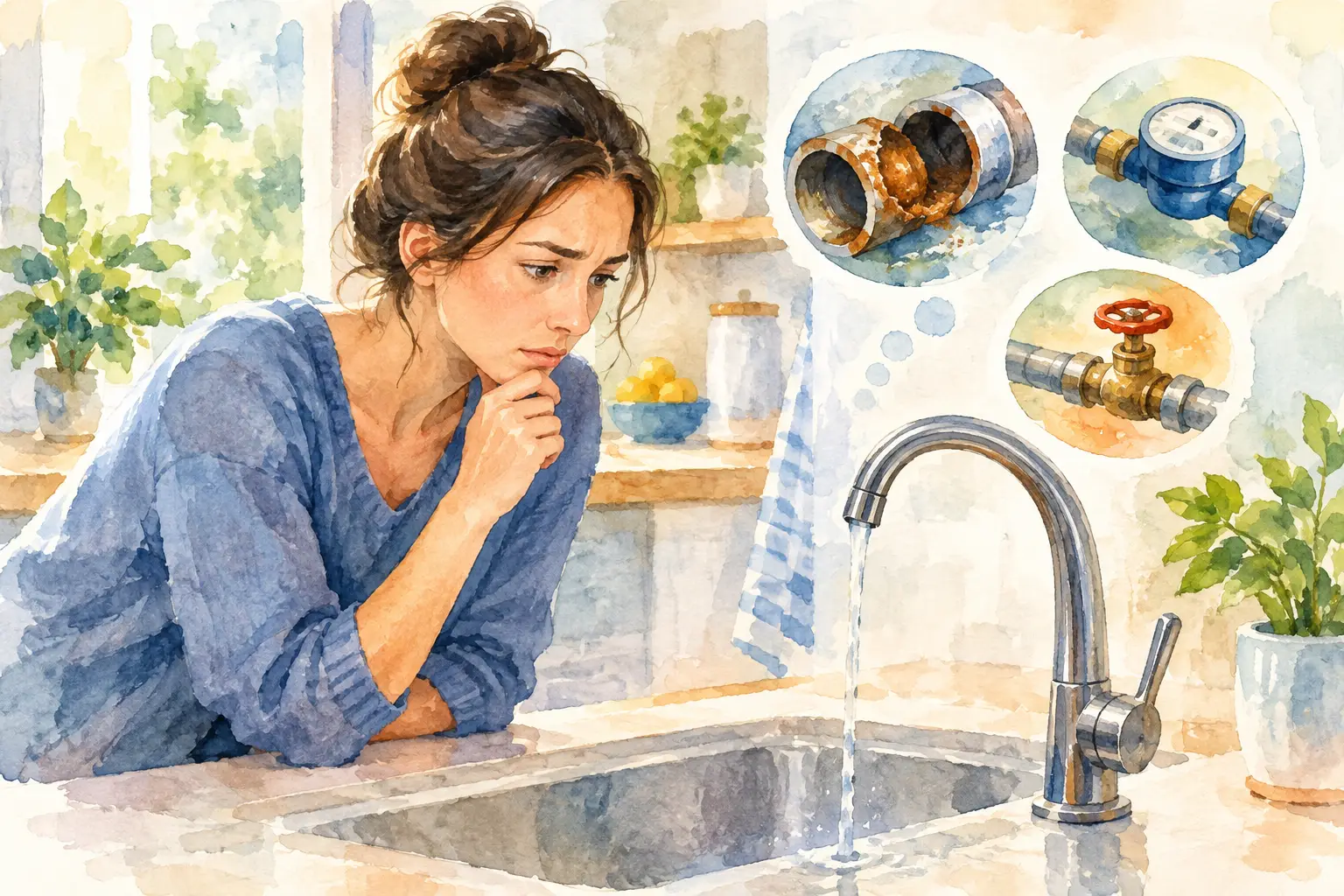
Your shower turns into a trickle just as everyone is getting ready for work. The washing machine takes forever to fill. A faucet that used to rinse dishes quickly now feels frustratingly weak. If your house has low water pressure, the cause may be small and fixable – or it may be your plumbing system asking for attention.
The good news is that pressure problems usually leave clues. Where the issue occurs, when it started, and whether hot or cold water is affected can point a plumber toward the right repair. We don’t guess. We assess. That means solving the actual problem instead of swapping parts and hoping for the best.
First, Tell Pressure From Water Flow
People often use “water pressure” to describe any weak stream, but pressure and flow are not always the same thing. Pressure is the force pushing water through your pipes. Flow is how much water makes it through a fixture once a tap is open.
A clogged faucet aerator can reduce flow at one sink even when the home’s overall water pressure is perfectly fine. On the other hand, weak water at several fixtures may point to a partially closed shutoff valve, a pressure regulator issue, a supply-line restriction, or aging pipes.
This distinction matters because the repair can range from a quick cleaning to a system-wide inspection. A clear diagnosis protects your time, your budget, and your home.
Is Low Water Pressure Affecting One Fixture or the Whole House?
Start by checking a few fixtures throughout the home. Run both hot and cold water at a kitchen sink, bathroom sink, shower, and outdoor hose connection if conditions allow. Notice whether the stream is weak everywhere or only in one place.
When Only One Faucet or Shower Is Weak
A single weak fixture is commonly caused by mineral buildup or debris caught in the aerator, showerhead, or cartridge. Calgary’s water can leave mineral deposits behind over time, particularly in showerheads and faucet screens. Renovation work or a recent municipal water interruption can also stir up sediment that later settles inside a fixture.
If you are comfortable doing so, remove the aerator at the end of the faucet spout and rinse it clean. A showerhead may benefit from a careful cleaning as well. Avoid forcing parts that are seized or corroded. A small leak or stripped fitting can turn a simple task into a bigger repair.
If cleaning does not improve the stream, the fixture cartridge or its supply connection may need professional attention. This is especially likely when a faucet is hard to turn, drips, makes noise, or delivers weak pressure on only the hot or cold side.
When the Whole House Has Low Water Pressure
Weak water throughout the house needs a broader look. Check whether the main water shutoff valve is fully open. It is often located where the water line enters the home, near the water meter, or in a utility area. A valve that was partially closed during a repair, inspection, or move can quietly limit water to the entire home.
Also consider timing. Did the pressure drop suddenly after a plumbing repair? Did it become worse gradually over months? A sudden change can point to a valve issue, a leak, a failed pressure regulator, or a water supply concern. A gradual decline may be related to mineral scale, corroded piping, or an aging system that is becoming restricted inside.
Do not force the main shutoff valve if it feels stuck. Older valves can fail when disturbed, and a broken shutoff is the last thing you need during a busy day.
Common Causes of Low Water Pressure in a House
A low water pressure house can have several causes, and more than one issue may be present at the same time. A trained plumber narrows the possibilities by testing pressure, inspecting accessible components, and looking at the condition and age of the plumbing.
A partially closed main valve is one of the simpler causes. So is a clogged filter, aerator, or fixture cartridge. These issues can often be resolved quickly once identified.
Pressure-reducing valves, also called pressure regulators, are another common culprit. These devices protect your plumbing from excessive incoming pressure. When a regulator wears out or fails, it may restrict water too much, cause pressure that fluctuates, or create unusual sounds in the pipes. Replacing it is not a guessing game – the new unit must be correctly selected, installed, and tested.
Older galvanized steel pipes can create a more involved problem. Rust and mineral deposits can build up inside the pipe walls, gradually reducing the space available for water to move. The outside of the pipe may look acceptable while the inside is heavily restricted. In that situation, cleaning a faucet will not restore strong water service. Targeted pipe replacement or repiping may be the durable answer.
Hidden leaks can also reduce available water pressure, particularly if a leak is significant. Watch for damp areas, stained ceilings, unexplained water use, a water meter that continues moving when everything is off, or the sound of water running inside walls. A suspected leak deserves fast action. Water damage does not wait for a convenient appointment.
Why Hot Water May Be Weak While Cold Water Is Fine
If cold water has normal force but hot water is weak at several fixtures, the issue may be connected to the water heater, its shutoff valves, or the hot-water piping. Sediment in a water heater can contribute to reduced performance, and a valve that is not fully open can limit the hot-water supply.
This is not a reason to take apart your water heater on your own. Hot water systems involve high temperatures, pressure, fuel or electrical connections, and safety controls. If you are also getting inconsistent temperatures, discolored water, rumbling sounds, or no hot water at all, schedule service promptly.
In Alberta, a failing water heater is more than an inconvenience during colder months. Your family needs reliable hot water for bathing, cleaning, and daily routines. A proper assessment can determine whether a repair makes sense or whether replacement is the smarter long-term investment.
Check for Neighborhood or Municipal Supply Issues
Before assuming the problem is inside your home, ask a nearby neighbor whether they have noticed weak water pressure. If several homes are affected, there may be utility work, a water-main issue, or a temporary supply change in the area.
Even then, do not ignore signs that point to an issue within your property. If your neighbors have normal pressure while yours remains weak, the cause is likely in your home’s plumbing or service line. A professional inspection can separate a municipal issue from a private plumbing repair without unnecessary work.
When Low Pressure Needs Urgent Help
Low pressure alone is not always an emergency, but it becomes urgent when it appears alongside warning signs. Call for prompt plumbing help if pressure drops suddenly and you see water where it should not be, hear rushing water in walls, smell sewage, lose water entirely, or notice a ceiling bulging from a possible leak.
You should also act quickly if a frozen pipe may be involved. Calgary winters can put plumbing under real strain. Never use an open flame to thaw pipes, and do not keep increasing water pressure against a suspected freeze. A pipe can split as ice expands, then leak heavily once it thaws.
ValveOn Plumbing coordinates licensed, insured professionals for emergency dispatch and scheduled repairs. You will get a clear explanation of what is happening, what the repair involves, and what to expect before work moves forward. No shortcuts, and no confusing runaround.
What a Professional Pressure Assessment Looks For
A thorough visit is about more than turning on a faucet. The plumber may test pressure at different points, compare hot and cold performance, inspect shutoff valves and regulators, check fixtures for restrictions, and look for signs of leaks or pipe deterioration.
They will also consider the home itself. A newly built home, a renovated older property, and a house with original galvanized piping have different likely causes and different repair options. Sometimes a small fixture repair is all that is needed. Sometimes investing in a better valve, a water-heater service, or pipe replacement prevents repeated calls and ongoing frustration.
The right recommendation should fit the condition of your plumbing, not push the biggest possible repair. Solid work that stands the test of time is usually the best value.
A weak stream may seem like a minor annoyance, but your plumbing is part of how your household starts, ends, and moves through every day. If simple checks do not restore normal water flow, book a service appointment and get a clear answer before a small restriction becomes a bigger disruption.
Leave a Reply