

A water heater usually gets your attention at the worst possible moment: the shower turns cold, water appears beneath the tank, or a busy morning leaves everyone waiting for hot water. When replacement time comes, tankless versus storage water heaters is not simply a question of which model is newer. It is a decision about how your household uses water, what your home can support, and how much you want to invest upfront.
For Calgary homeowners, winter performance and reliable installation matter just as much as efficiency ratings. The right system should deliver comfortable, dependable hot water without creating surprises in your budget or your home.
Tankless versus storage water heaters: the real difference
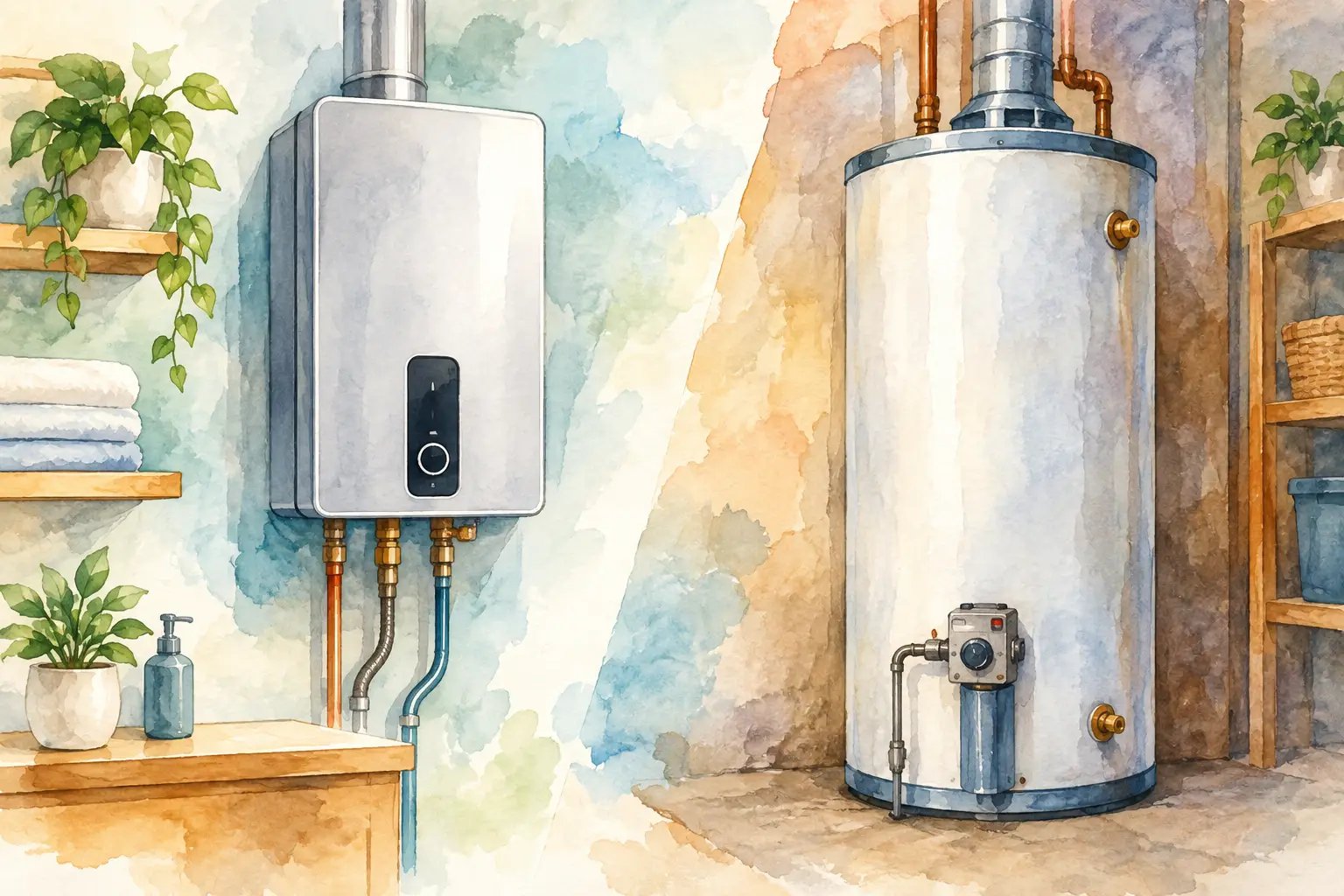
A storage water heater, often called a hot water tank, heats and stores a set supply of water. Most homes have a 40- to 60-gallon tank, although the right size depends on the number of people in the home and their routines. The burner or heating elements cycle on to keep that stored water hot, ready when a faucet, shower, dishwasher, or washing machine calls for it.
A tankless water heater heats water as it flows through the unit. There is no reservoir waiting in the basement. When you open a hot-water tap, the system senses the flow, fires up, and heats the water on demand. As long as it is sized correctly and stays within its capacity, it can provide hot water for a long time without running out.
That difference sounds simple, but it shapes nearly every trade-off: purchase price, installation requirements, household comfort, maintenance, and energy use.
When a storage water heater is the smarter choice
A conventional tank remains a practical, dependable choice for many families. It generally costs less to purchase and install, especially when it is replacing an existing tank in the same location. If your current tank has failed and your household needs hot water restored quickly, a like-for-like replacement can often be the most straightforward path forward.
Storage tanks also handle several fixtures running at once very well, provided the tank is properly sized. A larger tank stores a strong reserve of hot water for back-to-back showers, a laundry load, and the dishwasher. Once that reserve is used, though, the tank needs recovery time to heat the next full supply.
For homeowners watching their upfront costs, this is often the deciding factor. A quality tank installation can deliver years of reliable service without requiring major changes to gas lines, venting, electrical capacity, or plumbing layout.
There are trade-offs. A storage tank takes up floor space, continually uses energy to maintain its stored water temperature, and has a finite supply during periods of heavy demand. Tanks also have a limited life expectancy. Internal corrosion, sediment buildup, and a failing anode rod can eventually lead to leaks. A leaking tank is not a wait-and-see problem. Water damage can spread quickly through finished basements, flooring, and stored belongings.
Where tankless water heaters earn their higher price
Tankless units appeal to homeowners who want long-duration hot water, a compact footprint, and lower standby energy loss. Since the system heats only when hot water is being used, it does not spend the day keeping a large tank of water hot. For the right household, that can reduce energy use over time.
The space savings can be meaningful, too. A wall-mounted tankless unit can free up room in a mechanical area, utility closet, or basement. That can be especially useful during a renovation or when homeowners want more usable storage.
The biggest comfort benefit is the ability to keep hot water flowing. A properly sized unit can support a long shower without the familiar moment when a tank has been drained. It can be a strong fit for smaller households with frequent showers, homes with limited mechanical-room space, or families planning to stay put long enough to benefit from the investment.
But “endless” does not mean unlimited. Every tankless model has a maximum flow rate. If two showers, a dishwasher, and a washing machine all demand hot water at once, the unit may not be able to raise the incoming water temperature enough to meet every demand. In Alberta, where incoming water can be very cold in winter, correct sizing becomes even more important.
A tankless upgrade can also require additional work behind the walls or in the mechanical room. Gas-fired models may need a larger gas line, new venting, a condensate drain, and appropriate electrical connections. An electric tankless unit can demand substantial electrical capacity. Those requirements are not reasons to avoid tankless systems. They are reasons to have the home assessed before choosing one based on a showroom label or online price.
Your household routine matters more than the technology
The best choice starts with real life. Think about when and where your household uses hot water, not just how many bathrooms you have.
A couple who rarely run more than one shower at a time may appreciate the efficiency and compact size of tankless. A larger family with a hectic morning routine may be equally happy with a properly sized high-recovery storage tank, particularly if several people need hot water at the same hour.
If you regularly fill a large soaking tub, use a high-flow shower, or have teenagers who take long showers, calculate those demands honestly. A tankless unit can handle them, but only when its flow capacity matches the job. A tank that is too small will run cold. A tankless unit that is undersized will create frustrating temperature drops or reduced flow. We do not guess. We assess.
It also helps to consider your plans for the home. If you are finishing a basement, adding a bathroom, or building a suite, your hot-water demand may soon change. Choosing equipment for yesterday’s household can lead to another replacement or upgrade sooner than expected.
Installation quality is part of the decision
No water heater performs better than its installation. Proper venting, gas sizing, drainage, temperature settings, pressure protection, and code compliance all protect the equipment and the people in your home.
Tankless installations have more variables, but storage tanks need careful work as well. The tank must be safely connected, equipped with the correct relief valve discharge piping, and installed with appropriate shutoffs and drainage considerations. If the old unit failed because of excessive pressure, corrosion, or poor maintenance, simply replacing it without diagnosing the cause may repeat the same problem.
Calgary homes also benefit from attention to water quality and maintenance. Mineral buildup can reduce efficiency in both styles of heater. Tankless systems often need periodic flushing to remove scale from the heat exchanger. Storage tanks benefit from maintenance that addresses sediment and checks the anode rod, which helps protect the tank from corrosion.
Skipping maintenance may save a little time today, but it can shorten equipment life and make a future failure more likely. Solid work that stands the test of time includes looking after the system after installation, not just getting it running on day one.
Compare total cost, not just the estimate
A storage tank usually wins on initial price. Tankless often wins on longevity and reduced standby losses, although actual savings depend on fuel costs, water use, equipment efficiency, and installation scope. The gap is not the same in every home.
When comparing quotes, ask what is included. A fair estimate should account for the heater itself, removal and disposal of the old unit, required venting or gas work, permits where needed, safety components, warranty details, and any repairs needed to make the installation correct. A low number that leaves out essential work is not a bargain.
It is also worth weighing the cost of interruption. If your current tank is leaking or producing rusty water, waiting too long can turn a planned replacement into an emergency. If you have no hot water at all, restoring safe service may be the first priority, with longer-term upgrade decisions made once the immediate problem is under control.
Choose the system your home can rely on
There is no universal winner in tankless versus storage water heaters. A well-sized storage tank is a great choice when you want lower upfront cost, simple replacement, and a dependable reserve for busy periods. A correctly installed tankless system can be an excellent long-term upgrade when you value space savings, on-demand performance, and potential energy savings.
Before replacing either type, have a licensed professional assess your existing setup, household demand, fuel supply, venting, and future plans. ValveOn Plumbing can help Calgary homeowners make that call clearly, with straightforward recommendations and no shortcuts.
If your water heater is leaking, making unusual noises, delivering rusty water, or leaving your family without hot water, treat it as a reason to act early. The right replacement should make everyday life easier: hot showers, clean dishes, comfortable mornings, and one less thing to worry about at home.
Leave a Reply