

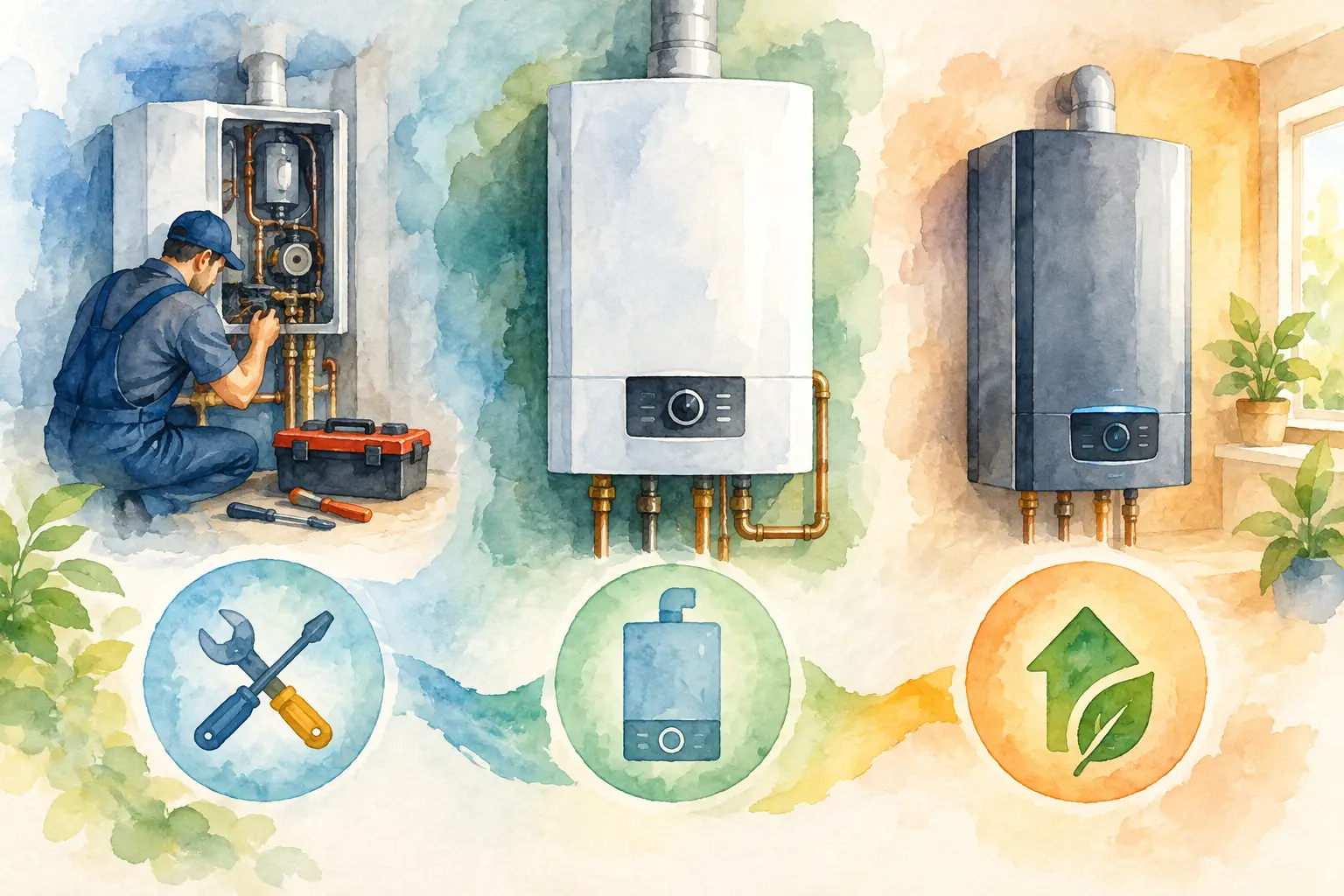
A boiler rarely chooses a convenient time to act up. It is usually during a cold Calgary morning, before guests arrive, or when the family needs hot water most. The right boiler repair options depend on what has failed, how old the system is, and whether a targeted fix will provide dependable heat or simply buy time.
A strange noise, dropping pressure, a leak, or no heat at all does not automatically mean you need a new boiler. But it does mean the issue deserves a proper assessment from a licensed professional. We do not guess. We assess. Then you get a clear explanation of what is wrong, what it will take to fix it, and what your practical choices look like.
Start With the Problem, Not the Panic
Boilers are complex systems, but the symptoms homeowners notice are usually straightforward: rooms are not heating evenly, the system keeps losing pressure, hot water is inconsistent, or there is water around the unit. Some faults are relatively contained. Others can point to a larger reliability or safety concern.
If you smell gas, notice a carbon monoxide alarm, see significant water leaking, or have no heat during freezing weather, treat it as urgent. Turn off the system if it is safe to do so, follow the manufacturer’s basic safety guidance, and call for emergency service. A quick response can prevent water damage, frozen pipes, and a much more stressful repair.
For less urgent symptoms, avoid repeatedly resetting the boiler or adjusting controls at random. That can hide useful clues and, in some cases, put extra strain on parts that are already failing. A technician should identify the cause before recommending a repair.
Boiler Repair Options for Common Failures
A professional diagnosis will narrow the issue down to a specific component, water-quality problem, installation concern, or system-wide wear. Here are the repairs homeowners most often encounter.
Leak repair and pressure restoration
A small leak may come from a valve, fitting, seal, pump connection, or pressure relief component. These repairs can be simple when the source is accessible and the surrounding parts are in good condition. A technician can repair or replace the failed part, restore the correct system pressure, and check for additional leaks.
The trade-off is that a leak in the boiler’s heat exchanger is more serious. Depending on the model, age, and warranty status, heat exchanger repair may be costly or impractical. If corrosion has affected several areas, replacement can be the more honest long-term answer.
Circulator pump or zone valve repair
When some rooms are warm and others stay chilly, the problem may involve the circulator pump, zone valves, thermostat controls, or trapped air in the heating lines. A pump or valve replacement can often restore balanced heat without replacing the entire boiler.
This is also a good time to ask whether the system has been properly maintained and balanced. The repair may solve today’s issue, while a maintenance plan helps reduce repeat trouble next winter.
Ignition, flame sensor, or control repair
Modern boilers rely on sensors, ignition parts, control boards, and safety switches to run correctly. A failed ignition component can leave you with no heat even when the rest of the unit is mechanically sound. Replacing the affected part is often a sensible repair, especially on a newer boiler.
Control-related faults need careful testing. Error codes are helpful, but they are not a complete diagnosis. The same code can be caused by a wiring issue, sensor failure, venting concern, or another underlying condition. No shortcuts means confirming the cause before installing parts.
Expansion tank and pressure relief service
If boiler pressure rises too high, drops frequently, or water discharges from a relief valve, the expansion tank may be waterlogged or failing. Recharging or replacing an expansion tank is generally a focused repair that can protect the boiler and heating system from ongoing pressure stress.
A relief valve should not be ignored just because it stops dripping. It may have opened for a reason. The technician should identify why the system pressure changed rather than replacing the valve alone and hoping for the best.
Cleaning, flushing, and water treatment
Sediment, sludge, and mineral buildup can reduce efficiency and contribute to cold spots, noises, restricted flow, and premature component wear. In some systems, a professional flush and appropriate water treatment can improve performance and support a repair.
This option depends on the condition of the system. Cleaning is valuable when it addresses a confirmed issue, not as a substitute for replacing a worn-out boiler. If the unit has repeated failures, severe corrosion, or an unreliable heat exchanger, a flush will not turn it into a dependable long-term solution.
When Repair Is the Smart Choice
Repair usually makes sense when the boiler is relatively young, the issue is isolated, and the rest of the system is operating safely and efficiently. A single failed pump, sensor, valve, or ignition component should not automatically lead to a replacement recommendation.
It also makes sense when a repair can be completed quickly and the expected cost is reasonable compared with the remaining service life of the boiler. Homeowners deserve options, not pressure. A good technician will explain the repair, the likely outcome, and any signs that future work may be needed.
Ask direct questions before approving the work: Is this failure likely to return? Are other parts showing wear? Is the repair covered by a parts or labor warranty? What maintenance would help protect the system? Clear answers make the decision easier.
When Boiler Replacement Is the Better Option
Replacement becomes more practical when repairs are frequent, major components have failed, or the boiler is nearing the end of its expected useful life. Age alone is not the whole story. A well-maintained older boiler may still have life left, while a newer unit with serious corrosion or installation issues may not be worth repeatedly repairing.
Consider replacement if repair costs are climbing, parts are difficult to source, heating bills have risen without a clear explanation, or your household comfort is becoming unpredictable. A boiler that breaks down every winter is not just a repair expense. It is a disruption to your home and family routine.
A new boiler can improve efficiency, reliability, and control, but it must be sized and installed correctly. An oversized or poorly configured unit can short-cycle, waste energy, and wear prematurely. The right replacement plan considers your home’s heating needs, existing piping, venting requirements, hot-water demand, and future renovation plans.
Repair, Replacement, or an Upgrade?
Sometimes the best answer is not simply fixing what broke or replacing like for like. If you are renovating, adding a bathroom, finishing a basement, or dealing with uneven heat, an upgrade may solve broader comfort issues. That could include new controls, zoning improvements, system cleaning, or a boiler better matched to your household.
Upgrades cost more upfront, so they should have a clear purpose. If your current system meets your needs and needs one contained repair, keep the solution focused. If the system is limiting comfort throughout the home, investing in the full setup may provide better value over time.
What a Professional Boiler Visit Should Include
A boiler service appointment should leave you with more than a reset button and a bill. Your technician should inspect the unit, confirm the fault, assess pressure and safety controls, check visible connections, and explain the repair in plain language.
You should also receive upfront pricing before work begins whenever the scope is known. If further testing reveals a larger issue, the change should be explained clearly before additional work moves ahead. Respect for your home includes protecting work areas, communicating arrival details, and leaving the space tidy when the job is done.
At ValveOn Plumbing, the goal is simple: accurate diagnosis, friendly communication, and solid work that stands the test of time. Whether your boiler needs a small part, an urgent repair, or a replacement plan, you should know exactly why that recommendation is being made.
A boiler problem can feel urgent, but the decision does not have to feel confusing. Get the system assessed early, especially before Alberta’s cold weather puts extra demand on it. A clear diagnosis today can protect your heat, your home, and a much smoother week ahead.
Leave a Reply