

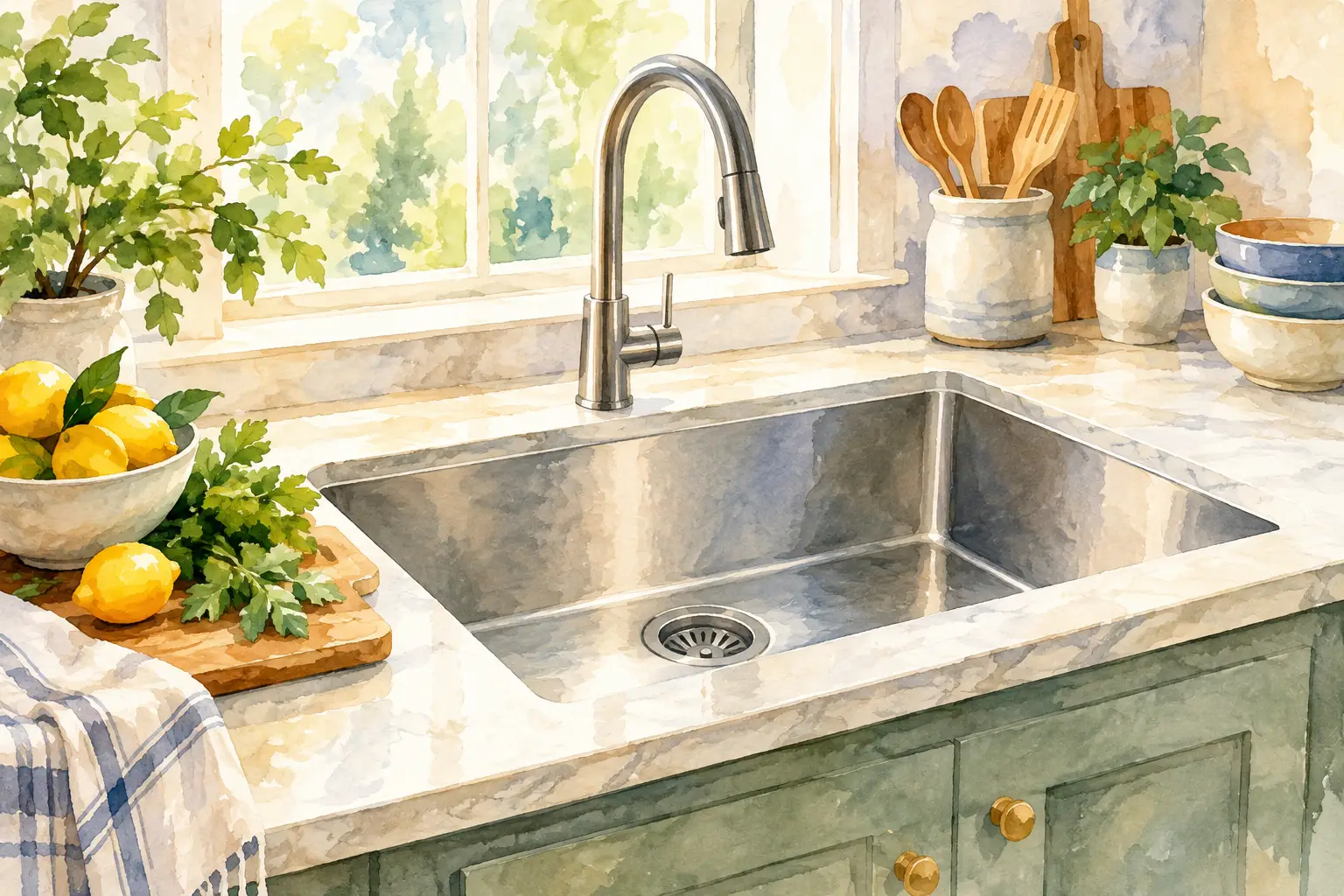
A kitchen sink earns its keep every day. It catches hot pans, sharp utensils, coffee grounds, greasy dishes, and whatever the family leaves behind after dinner. That is why choosing from the best kitchen sink materials is less about finding the prettiest sample and more about choosing what will hold up to your real routine.
A sink replacement is also the right time to think beyond the basin itself. Your cabinet size, countertop material, faucet placement, garbage disposal, and drain connections all affect the final result. A sink should look right, drain properly, and give you years of easy use. No shortcuts.
How to Choose the Best Kitchen Sink Materials
Start with how you use your kitchen. A household that cooks often and piles pans in the sink has different needs than a homeowner designing a quiet, low-maintenance kitchen for two. Durability matters, but so do noise, stain resistance, cleaning habits, and the style of the room.
Weight is another practical factor. Some sinks need extra cabinet support, especially when paired with stone countertops. The installation method matters too. Undermount sinks create a clean countertop edge and make cleanup easier, but they must be secured correctly. Drop-in sinks are often more forgiving for replacement projects and can work well with many countertop materials.
Here is how the most popular options compare.
Stainless Steel: The Dependable All-Rounder
Stainless steel remains one of the best choices for busy kitchens because it is durable, affordable, and easy to match with appliances. It will not crack from a dropped cast-iron pan, and it handles heat well. For most homeowners, it offers the best balance of performance and cost.
The trade-off is that thin stainless steel can sound loud when water hits the bowl or dishes are set down. It can also show water spots and fine scratches. Those scratches usually blend into a soft brushed finish over time, but they are worth considering if you want a flawless-looking sink every day.
Look for a thicker gauge steel and sound-deadening pads underneath the basin. A quality stainless sink with proper insulation feels more solid, reduces clatter, and holds up better under daily use. For a practical family kitchen, it is hard to beat.
Best for
Homeowners who want a long-lasting sink without a high price tag, or who prefer a clean, classic look that works with almost any kitchen design.
Granite Composite: Quiet, Strong, and Modern
Granite composite sinks are made from crushed stone mixed with resin. They have a smooth, matte appearance and are available in colors such as black, gray, brown, cream, and white. They are especially popular in kitchens with quartz or granite countertops because they create a more coordinated, built-in look.
One major advantage is noise control. Composite absorbs sound better than stainless steel, so dishwashing feels quieter. It also resists scratches well and does not show water spots as easily as polished metal.
The main consideration is care. Composite sinks are very durable, but they are not indestructible. Heavy objects dropped hard can chip an edge, and some finishes may show mineral buildup if water is left to dry regularly. Avoid harsh chemicals and follow the manufacturer’s cleaning recommendations. A soft cloth, mild soap, and regular drying usually go a long way.
Best for
Homeowners who want a quieter sink with a modern, matte finish and are comfortable with a little routine care.
Fireclay: Beautiful, Heavy, and Worth Planning For
A fireclay sink has a ceramic-like finish created by firing clay at extremely high temperatures. These are often associated with farmhouse or apron-front sinks, though other styles are available. Fireclay offers a bright, polished look that can make a kitchen feel warm, intentional, and high-end.
It resists stains, heat, and everyday cleaning products well. Tomato sauce, coffee, and food residue generally wipe away without much effort. The surface is also less likely to fade or discolor than some painted or coated materials.
But fireclay is heavy. Very heavy. An apron-front installation may require cabinet modifications and reliable support beneath the sink. It can also chip if cookware strikes the surface hard enough. That does not make it a poor choice. It simply makes proper planning essential before installation starts.
Best for
Homeowners planning a kitchen renovation who love a farmhouse-inspired or classic kitchen style and are prepared for a more involved installation.
Cast Iron: Classic Finish, Serious Weight
Enameled cast-iron sinks are known for their rich color, glossy finish, and substantial feel. The cast iron base is coated in porcelain enamel, creating a smooth surface that resists staining and stands up well to normal kitchen use.
Like fireclay, cast iron is a premium option that needs strong cabinet support. It is also more likely to chip if a heavy pot hits the enamel. Once the enamel is damaged, the exposed iron underneath can rust, so chips should be repaired promptly.
A cast-iron sink can be an excellent long-term choice when installed correctly. Just do not choose it based on appearance alone. Confirm that your cabinets and countertop plan can support the weight before ordering.
Best for
Homeowners who want a traditional, polished look and are completing a renovation with cabinetry built to handle a heavier fixture.
Porcelain: Attractive but Better for Gentle Use
Porcelain sinks can look similar to fireclay or enameled cast iron, but their construction varies. Some are durable enough for regular family use, while lighter options may be more prone to chipping, cracking, or staining over time.
For a lower-traffic kitchen, porcelain can be a cost-conscious way to get a classic white sink. In a kitchen that sees constant cooking, kids, heavy cookware, and rushed cleanup, it may require more care than stainless steel or composite.
If you are considering porcelain, ask about the sink’s construction, warranty, and installation requirements. The word “porcelain” alone does not tell you how tough the sink will be.
Copper: Character With a Maintenance Commitment
Copper sinks bring warmth and personality to rustic, traditional, and custom kitchens. Over time, copper develops a natural patina. Some homeowners love that changing finish because it makes the sink feel lived-in and unique. Others prefer a consistent appearance and may find the change frustrating.
Copper also requires gentler cleaning. Abrasive products can damage the finish, and acidic foods may temporarily affect its color. It is not the easiest material for a high-volume family kitchen, but it can be a striking choice when style is the priority and the homeowner understands the upkeep.
Best for
Homeowners creating a custom kitchen where natural variation is part of the design, not a problem to correct.
Do Not Forget Sink Size and Configuration
The material gets most of the attention, but the layout can affect your daily experience just as much. A single-bowl sink gives you uninterrupted space for baking sheets, stockpots, and large pans. It is a strong fit for homeowners with a dishwasher who do not need a separate rinsing area.
A double-bowl sink makes it easier to separate dirty dishes from food prep or hand-wash delicate items. The downside is that each bowl is smaller, which can be frustrating when washing oversized cookware. A low divider offers a middle ground, though water can move between bowls more easily.
Before buying, measure the cabinet base rather than the old sink opening alone. Also check faucet hole placement, garbage disposal clearance, dishwasher drain routing, and the condition of the shutoff valves and drain lines below. A new sink can expose old plumbing issues that were hidden for years.
Installation Matters as Much as the Material
A quality sink can still cause problems if it is not installed and sealed correctly. Undermount sinks need dependable support and a proper seal at the countertop edge. Drain assemblies need to sit square and tight. Garbage disposals add weight and vibration, so the mounting connection must be secure.
If you are changing sink styles, especially from a drop-in to an undermount or apron-front model, have the plumbing and cabinet space assessed before the purchase. A clear plan prevents last-minute surprises and helps protect your countertop investment.
The best choice is the one that fits how your home actually runs. Stainless steel is practical and proven. Composite is quiet and contemporary. Fireclay and cast iron bring classic beauty with added weight and planning. Choose the material you will be happy to use on a busy Tuesday night, not just the one that looks good in a showroom. And when it is time to install it, ValveOn Plumbing can help make sure the work is done correctly the first time.
Leave a Reply