

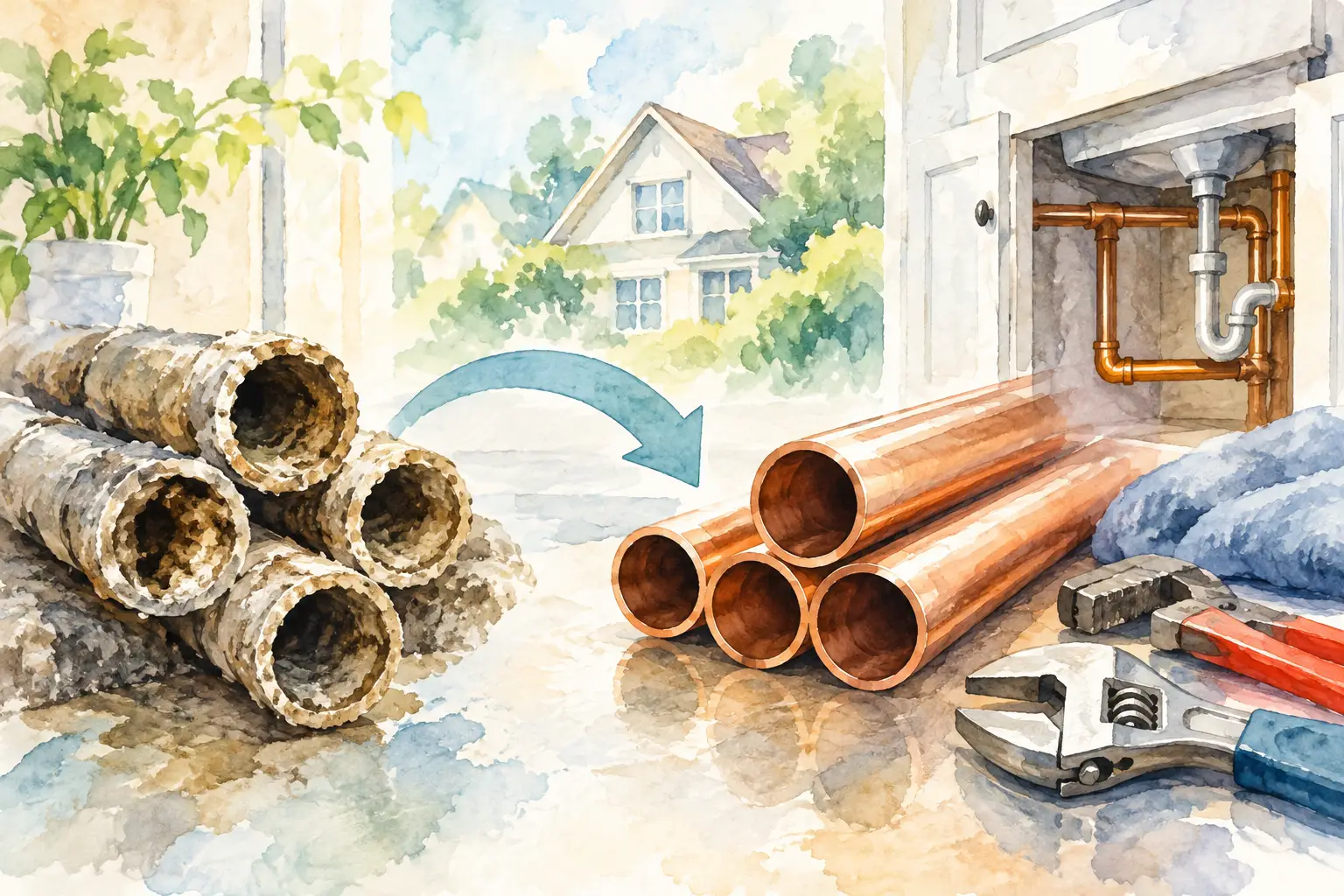
A Poly-B pipe can look perfectly fine right up until it does not. The concern is not simply an old plumbing material. It is the possibility of a sudden split behind a finished wall, under a floor, or near a bathroom your family uses every day. Poly-B removal gives homeowners a chance to replace aging water lines on their terms, rather than after a leak turns into a restoration project.
Polybutylene piping, often called Poly-B, was widely installed in homes built from the late 1970s through the mid-1990s. It is usually gray, flexible plastic pipe, though identifying it correctly can take a closer look at the pipe markings, fittings, and where the lines run. If you own an older Calgary-area home or are considering one, a plumbing inspection can provide clear answers without guesswork.
Why Poly-B Removal Is Worth Considering
Poly-B piping has a history of premature failures. Over time, exposure to treated municipal water can affect the inside of the pipe. Heat, pressure changes, poor installation practices, and stress at fittings can add to the problem. A pipe may weaken gradually, then crack or rupture with little warning.
That does not mean every home with Poly-B is leaking today, or that every homeowner must schedule an emergency repipe immediately. The right decision depends on the pipe’s condition, the age of the installation, prior leaks, visible damage, your insurance requirements, and your plans for the property. Still, waiting for obvious evidence can be risky because much of the system is hidden.
A planned replacement is usually easier to manage than a water damage emergency. You can choose the timing, understand the scope before work starts, protect rooms and belongings, and coordinate the project with a bathroom or kitchen update if one is already on your list. No shortcuts. Just a practical fix for a system that may no longer be earning your confidence.
Signs Your Home May Have Poly-B Piping
The most reliable starting point is a professional assessment. However, homeowners often notice clues that make an inspection worthwhile. Gray plastic water lines near the water heater, laundry area, utility room, or under a sink can be one sign. Poly-B was commonly used for interior water supply lines, not drain pipes.
Recurring pinhole leaks, damp spots, unexplained drops in water pressure, water stains on ceilings, or a musty smell near enclosed plumbing also deserve prompt attention. So do brittle-looking pipes, bulges, discoloration, or corrosion around metal connections. A leak near a fitting is not always proof that the entire system has failed, but it is a reason to look beyond the one visible repair.
If you are buying a home, ask for the plumbing system to be identified during the inspection period. If you are selling, knowing what is in the home helps you answer questions honestly and plan ahead. In some cases, insurers may ask about Poly-B or set conditions around coverage. Check directly with your provider rather than assuming your policy treats it one way or another.
What Happens During Poly-B Removal
A proper Poly-B replacement begins with mapping the home’s water lines and determining the least disruptive path to reach them. A plumber identifies the main water shutoff, fixture branches, accessible mechanical areas, and likely locations behind walls or ceilings. The goal is not to open every surface. It is to replace the vulnerable supply piping while keeping access cuts thoughtful and controlled.
The existing Poly-B lines are disconnected and replaced with approved modern water piping. The best material and installation method depend on the home, local requirements, water system layout, and access. New shutoff valves or fixture connections may also make sense if the old ones are worn or difficult to operate.
Water must be shut off for portions of the job, and there may be periods when certain bathrooms, kitchens, or laundry connections cannot be used. For a smaller, accessible system, disruption can be limited. A full-home replacement often takes longer and may involve drywall access in strategic locations. A good contractor explains those realities before work begins, not after your home is opened up.
Once the new lines are installed, the plumbing is pressure-tested and checked for leaks before walls are closed. The water is restored, fixtures are tested, and the work area is cleaned as thoroughly as possible. Drywall repair and painting may be a separate part of the project, so confirm exactly what is included in the estimate.
Can You Replace Only Part of a Poly-B System?
Sometimes, yes. If an isolated section is accessible and the rest of the piping has been assessed carefully, a targeted repair may be reasonable. It can be the right short-term solution when budget, renovation timing, or a specific failure calls for immediate action.
The trade-off is simple: replacing one failed section does not change the age or condition of the Poly-B still in the walls. For a home with widespread Poly-B, repeated spot repairs can become frustrating and expensive. A full replacement costs more upfront, but it removes the material from the active water supply system and reduces uncertainty moving forward.
How to Plan the Project Without Surprises
Start with an on-site evaluation, not a price guessed over the phone. The layout of your home matters. A bungalow with an open utility room is very different from a finished two-story home with multiple bathrooms and limited access. The number of fixtures, basement development, ceiling finishes, and any past renovations can all affect the scope.
Ask for clear communication around the work plan: which areas need access, how long water will be off, what protection will be used for floors and furniture, whether permits are required, and who handles patching afterward. You should also receive straightforward invoicing that separates the plumbing work from optional repairs or upgrades.
If you are already renovating, Poly-B removal is often smart to coordinate with that project. Opening walls for a new shower, kitchen layout, or basement finish creates an opportunity to update supply lines while surfaces are already being changed. On the other hand, do not postpone an active leak just to wait for a future renovation. Water has its own schedule.
For households with young children, remote work, or limited bathroom access, scheduling matters as much as pipe choice. A respectful plumbing team can help phase work, keep you informed about daily access, and leave the home functional whenever possible. Plumbing work can be disruptive, but it should never feel chaotic.
When to Call for Immediate Help
A suspected Poly-B leak needs urgent attention if water is actively flowing, a ceiling is sagging or stained, flooring is becoming wet, or the water meter continues moving when all fixtures are off. Shut off the main water supply if you can do so safely, move valuables away from the affected area, and call for emergency plumbing dispatch. Do not cut into wet drywall near electrical wiring or assume a small drip will stay small overnight.
For non-emergency concerns, book an inspection before you have a failure. ValveOn Plumbing can coordinate an assessment with licensed, insured professionals who will explain what they find in plain language. We do not guess. We assess. You get a clear picture of the risks, the practical options, and the work required to protect your home.
A home should not make you nervous every time you leave for the weekend or hear water running behind a wall. If Poly-B is part of your plumbing system, getting informed now is a calm, sensible next step for your home and family.
Leave a Reply