
A pipe does not wait for a convenient time to burst. It can happen before work, during a family dinner, or in the middle of a cold Calgary night when your home needs hot water most. Emergency plumbing is about taking control of the first few minutes, protecting your home, and getting a qualified professional on the way before a small failure turns into major damage.
The goal is not to diagnose every part yourself. The goal is to stop the water, keep people safe, and give the plumber a clear picture of what happened. No panic. No shortcuts. Just the right next step.
What Counts as Emergency Plumbing?
Not every drip needs a midnight service call. A faucet that leaks slowly into a sink can often wait for a scheduled repair. But active water where it should not be, no heat or hot water in severe weather, sewage backing up, or a suspected gas-related appliance issue deserves quick attention.
Call for emergency plumbing help when water is actively flooding a room, a pipe has burst or frozen, a toilet is overflowing and will not stop, a drain is backing up sewage, or a water heater is leaking heavily or has failed when your household cannot safely go without hot water. A major leak near electrical outlets, your electrical panel, or appliances is especially urgent.
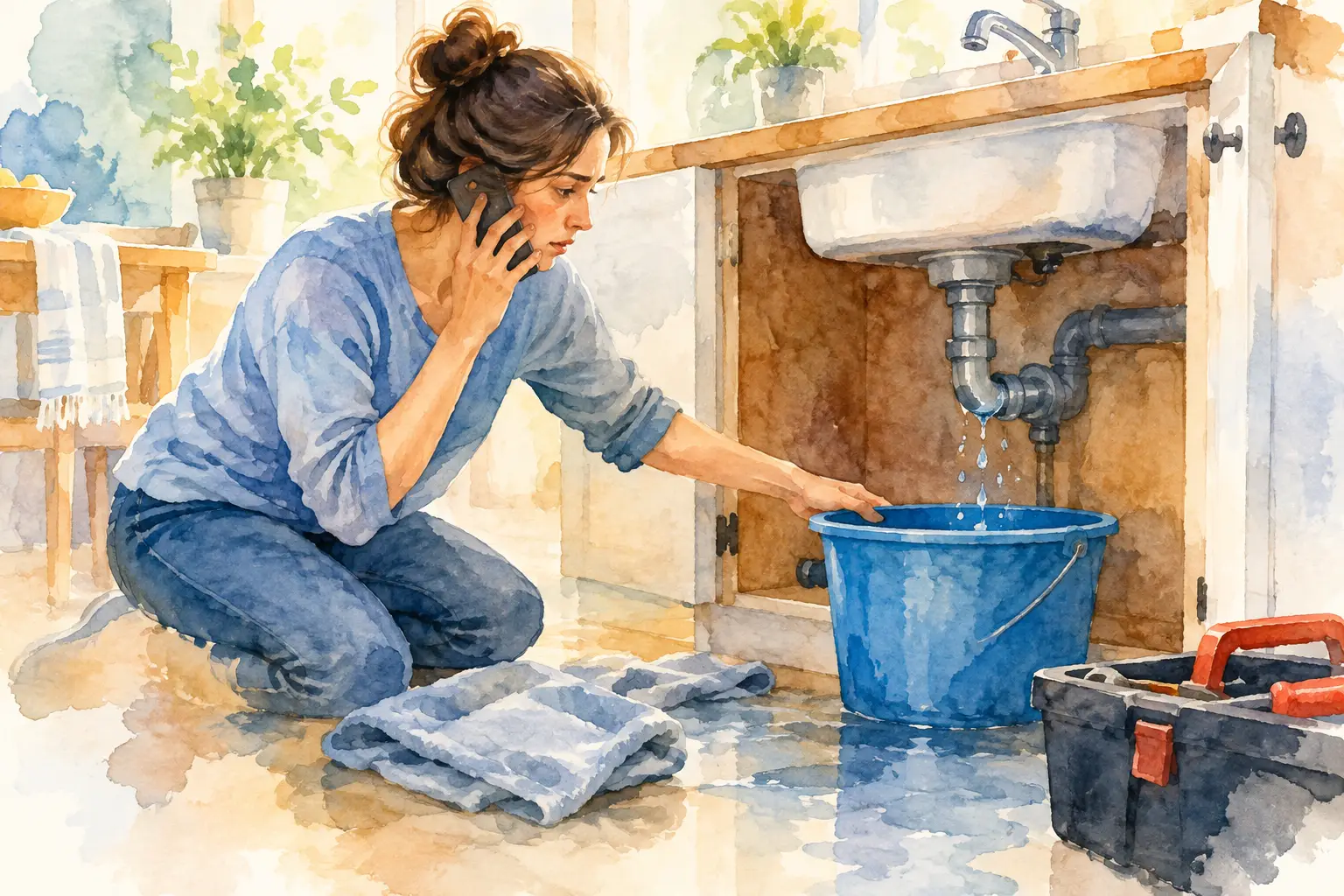
It also depends on the source and the risk. A small leak beneath a bathroom sink may be manageable if you can close the local shutoff valve and place a container underneath. A leak inside a wall, ceiling, or finished basement is different. Water can travel farther than it appears, soaking insulation, flooring, drywall, and framing along the way.
First Steps Before an Emergency Plumber Arrives
The right actions can reduce water damage and make the repair faster once help arrives. Start with safety, then contain the issue.
Shut Off the Water if You Can
For a toilet overflow, close the small shutoff valve on the wall or floor behind the toilet. Turn it clockwise until it stops. For a leaking sink, dishwasher, washing machine, or water heater, look for the nearby supply valve first.
If the leak is serious, you cannot identify the source, or water is coming through a ceiling, turn off the main water supply to the home. Many homes have a main shutoff near the water meter, utility room, mechanical room, or where the water line enters the house. Every homeowner should know where it is before an emergency happens.
Do not force a valve that is seized or badly corroded. A broken valve can make a difficult situation worse. Tell the dispatcher what you found and whether the water is still running.
Protect People Before Property
Water and electricity are a bad combination. If water is close to outlets, cords, appliances, or the electrical panel, stay clear of the area. Do not step into standing water if electrical equipment may be involved. If it is safe to do so, turn off power to the affected area at the breaker. If it is not safe, wait for qualified help.
Keep children and pets away from the space. Sewage backups also require extra care because the water may contain harmful bacteria. Avoid touching it without proper protection, and do not use sinks, toilets, showers, dishwashers, or washing machines until the cause is assessed.
Move What You Can, Then Document the Damage
Move rugs, furniture, electronics, and valuables away from the water if it is safe. Use towels, buckets, and a wet-dry vacuum only after the water source has been shut off and there is no electrical risk. Do not remove wet ceiling drywall or open walls on your own. A ceiling can hold a surprising amount of water, and damaged materials may collapse.
Take a few photos or short videos before cleanup begins. This gives the plumber useful context and can help if you need to speak with your insurance provider later. Keep the record simple: where the water started, when you noticed it, what you shut off, and any changes you observed.
What Not to Do During a Plumbing Emergency
The quickest-looking fix is not always the safest one. Store-bought drain chemicals are a common example. They can damage pipes, create hazardous fumes, and leave caustic liquid behind for the person working on the drain. If a drain is fully blocked or sewage is coming back up, stop running water and call for service instead.
Avoid repeatedly plunging a toilet that is already overflowing. First, close its shutoff valve. Repeated flushing or plunging without controlling the water can send more water onto the floor.
Do not use duct tape as a long-term repair for a burst pipe or leaking fitting. It may slow a small drip briefly, but pressure can push past it without warning. And never try to relight, repair, or disconnect a gas water heater if you smell gas or suspect a combustion issue. Leave the area and contact the appropriate emergency utility service, then arrange qualified plumbing support.
When a Water Heater Problem Cannot Wait
Hot water tank failures are stressful because they affect showers, laundry, dishes, and daily routines all at once. In Alberta winters, the impact can feel even bigger. A lack of hot water is not always a flood emergency, but a leaking tank needs prompt attention.
If you see water pooling around the base of a tank, turn off the cold-water supply valve above it if it is accessible and safe. For an electric unit, switch off the breaker. For a gas unit, do not adjust gas controls if you smell gas. A technician can determine whether the problem is a failed valve, a connection, a pressure issue, or a tank that has reached the end of its service life.
Replacement is sometimes the honest answer. Repairing an older tank may cost less today, but it may not be the best value if the unit is corroded, inefficient, or likely to fail again soon. A good plumber explains the trade-off clearly, including the cost, timing, and expected lifespan of each option.
Why Fast Diagnosis Matters More Than a Fast Guess
A plumbing emergency can look simple from the surface. Water under a sink may come from a drain, supply line, faucet connection, dishwasher line, or a leak farther back in the cabinet. Water on a basement floor may be a failing appliance, a foundation drainage issue, or a backup in the plumbing system.
That is why emergency service should start with assessment, not assumptions. The right professional traces the source, checks the surrounding components, explains the repair in plain language, and provides clear invoicing before work moves forward. The immediate leak needs to stop, but the underlying failure should be addressed too.
At ValveOn Plumbing, the focus is on connecting homeowners with licensed, insured, vetted plumbing professionals who treat the home with respect and keep communication clear from dispatch through completion. We do not guess. We assess. The work should solve the problem in front of you and help prevent the same disruption from returning next week.
Prepare Now for the Emergency You Hope Never Happens
A little preparation can save valuable minutes. Find your main water shutoff and make sure responsible adults in the home know where it is. Keep the area around your water heater and mechanical room accessible. If you have a plumbing inspection or maintenance visit scheduled, ask the plumber to point out key shutoffs and flag aging supply lines, valves, or appliances.
Pay attention to early warnings: lower water pressure, banging pipes, rust-colored water, slow drains in more than one fixture, damp cabinet bottoms, or a water heater that makes new noises. These signs do not always mean an emergency is coming, but they are worth addressing before they become one.
When water is moving where it should not, act early. Shut it off if you safely can, protect your family and your home, and call for dispatch. A calm response in the first few minutes can protect far more than plumbing – it can protect the comfort and daily rhythm of your household.
Leave a Reply