

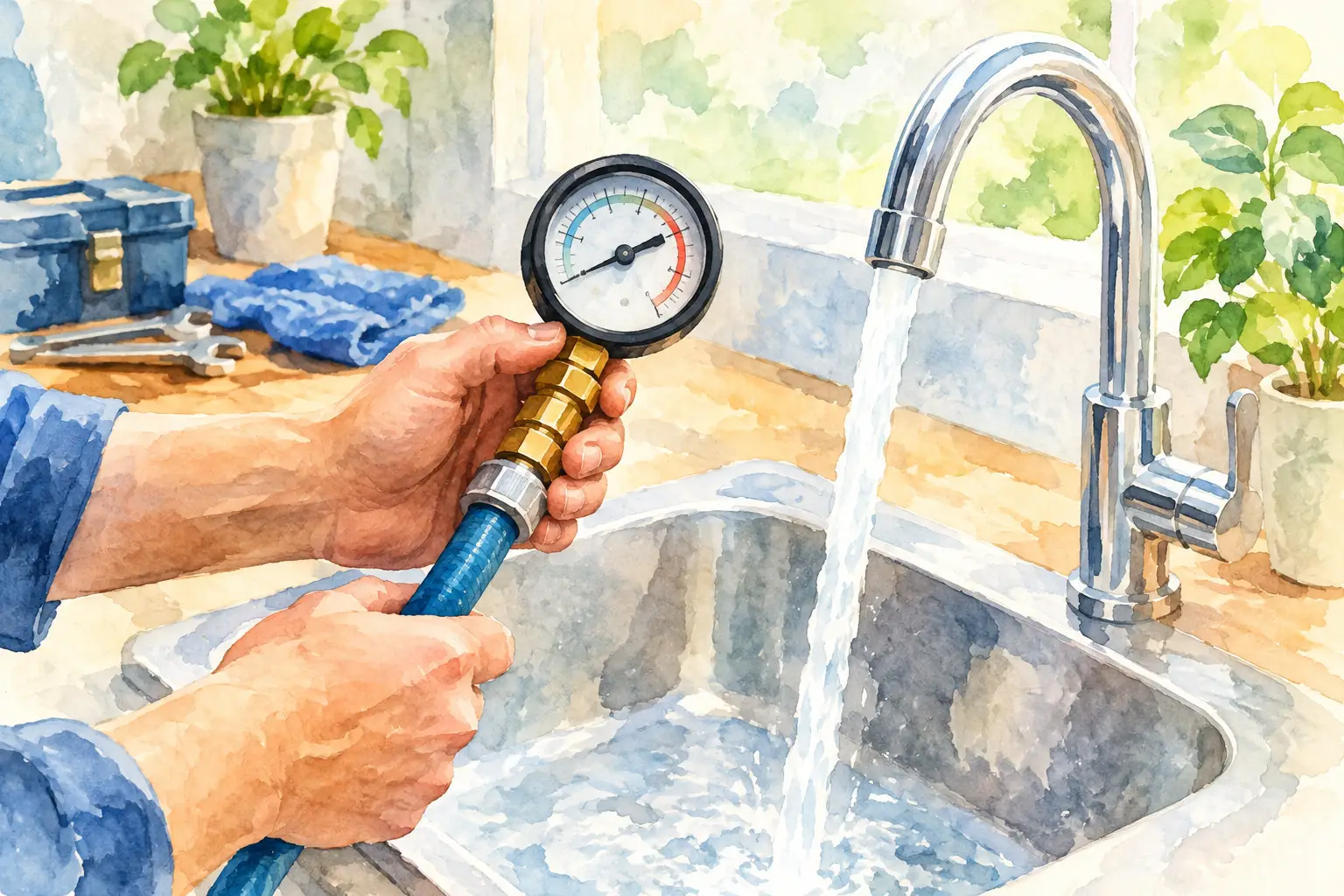
A shower that suddenly feels weak, pipes that bang when an appliance shuts off, or a faucet that sprays harder than usual can all point to the same question: how to test water pressure without guessing. A quick gauge test can tell you whether your home’s water pressure is in a healthy range or whether it may be putting strain on pipes, fixtures, and appliances.
You do not need to take apart plumbing or use complicated equipment. In most homes, a simple pressure gauge and a few quiet minutes are enough to get a useful reading. The number matters, but so does what happens when water is running elsewhere in the house. That difference helps separate a supply issue from a fixture, pipe, or water-use problem.
Why water pressure deserves attention
Water pressure is the force that pushes water through your plumbing. It affects how your shower performs, how quickly washing machines fill, and how reliably fixtures work throughout the home. For most residential plumbing systems, a reading between 40 and 60 psi is generally comfortable and healthy. Readings approaching or exceeding 80 psi deserve professional attention.
High pressure may sound like a good thing, but it can be hard on a home. It puts extra stress on supply lines, faucet cartridges, toilet fill valves, dishwasher hoses, washing machine hoses, and water heater components. Small weak points can turn into leaks sooner than expected. If a pressure-reducing valve has failed or the system lacks a properly working expansion tank, pressure can also rise and fall in ways that are tough on plumbing.
Low pressure has a different kind of impact. Daily routines become frustrating, especially when one person is showering while another runs the dishwasher. It can also signal a partially closed shutoff valve, mineral buildup, a leaking line, a failing pressure regulator, or a municipal supply issue. One slow faucet is usually a local fixture problem. Low pressure throughout the home is a reason to look deeper.
What you need to test water pressure
The simplest tool is an inexpensive water pressure gauge with a threaded female connection, usually designed to attach to a standard outdoor hose bib. Choose a gauge that reads at least 0 to 100 psi and has clear markings. Some gauges include a small indicator that records the highest pressure reached, which can help identify pressure spikes.
An outdoor spigot is usually the easiest testing point. If your exterior faucet is shut off for winter, frozen, leaking, or difficult to access, a laundry sink faucet with hose threads can work instead. Avoid forcing a gauge onto an incompatible connection. A plumber can test pressure from other points safely if needed.
Before starting, make sure the faucet you choose is in good condition. Do not test at a cracked hose bib or a connection that already leaks heavily. In Calgary’s colder months, never leave a gauge connected outside where it could freeze.
How to test water pressure with a gauge
Start by choosing a time when you can keep water use inside the house to a minimum. Turn off the dishwasher, washing machine, irrigation system, and any taps that may be running. This first reading is your static pressure, meaning the pressure in the system when no water is flowing.
- Remove any hose, nozzle, or splitter from the outdoor faucet. Check that the rubber washer inside the gauge connection is in place.
- Thread the gauge onto the faucet by hand. It should fit snugly, but do not overtighten it with tools.
- Open the faucet fully and wait a few seconds for the needle to settle. Record the psi reading.
- Keep the gauge attached and ask someone to run cold water at a nearby faucet or flush a toilet. Watch how far the pressure drops while water is moving through the system.
- Shut the water back off and watch the gauge for a minute or two. Note whether it quickly climbs, drifts upward, or stays steady.
A stable static reading in the 40 to 60 psi range is typically a reassuring result. A modest drop when another fixture runs is normal. A large drop can suggest restricted flow, a supply issue, or undersized or aging piping. A reading above 80 psi, especially one that climbs after water use stops, should not be ignored.
If your gauge has a maximum-pressure indicator, leave it attached for several hours during normal water use, provided it is indoors or protected from freezing weather. Check the peak reading afterward. Brief spikes can reveal a problem that a single two-minute test misses.
Static pressure and flowing pressure are not the same
A gauge test is useful, but it does not tell the whole story by itself. Static pressure measures force when water is not moving. Flowing pressure shows what happens when the home is actually using water. You can have normal static pressure and still notice a weak shower if there is buildup in the showerhead, a clogged cartridge, or a restriction in a branch line.
The reverse can happen too. High static pressure may make a shower feel strong while quietly wearing out valves and appliance hoses behind the scenes. That is why the best test includes both the quiet-house reading and the reading under normal demand.
What your water pressure reading may mean
A reading below 40 psi can explain weak flow throughout the home, but the next step depends on where the issue appears. If only one bathroom faucet is affected, clean the aerator first. Sediment and mineral deposits often collect there, and this is a simple fix. If one shower is weak, the showerhead or mixing valve may be the cause.
When several fixtures are weak, check that the main shutoff valve is fully open. A partly closed valve after recent plumbing work is more common than homeowners expect. If the main valve is open and the problem affects hot water only, the water heater shutoff, a recirculation component, or mineral buildup may be involved.
A reading over 80 psi points toward excessive incoming pressure or a pressure-regulating problem. Many homes have a pressure-reducing valve near the main water line. These valves do not last forever, and adjusting one without knowing its condition can create new problems. A licensed plumber can confirm whether the valve is operating properly, whether an expansion tank is doing its job, and whether your home needs a safer, more permanent correction.
Pressure that rises after the water heater runs deserves a closer look. As water heats, it expands. In a closed plumbing system, that expansion needs somewhere to go. A failed or missing thermal expansion tank can allow pressure to climb, increasing the risk of drips at the temperature and pressure relief valve, leaks at fittings, and premature wear on the water heater.
Signs you should call a plumber instead of testing again
A pressure gauge provides a helpful clue, not a final diagnosis. Call for service promptly if you see water leaking from a pipe, water heater, or appliance connection; hear repeated banging or knocking in the pipes; find pressure above 80 psi; or notice a sudden whole-home pressure drop. If water is actively leaking or a pipe has burst, shut off the home’s main water valve if it is safe to do so and request emergency dispatch.
It is also worth booking an inspection when pressure changes without an obvious reason. Older homes can have aging galvanized piping, hidden corrosion, worn shutoff valves, or previous repairs that limit flow. A clear diagnosis protects you from replacing the wrong part and paying twice.
At ValveOn Plumbing, the approach is simple: we do not guess. We assess. A licensed, insured professional can test pressure, inspect the components that control it, explain the findings in plain language, and provide upfront options for the repair.
A good pressure reading should support quiet pipes, dependable appliances, and a shower that feels right every morning. If yours does not, address it while it is still a manageable repair. No shortcuts, just solid work that stands the test of time.
Leave a Reply