

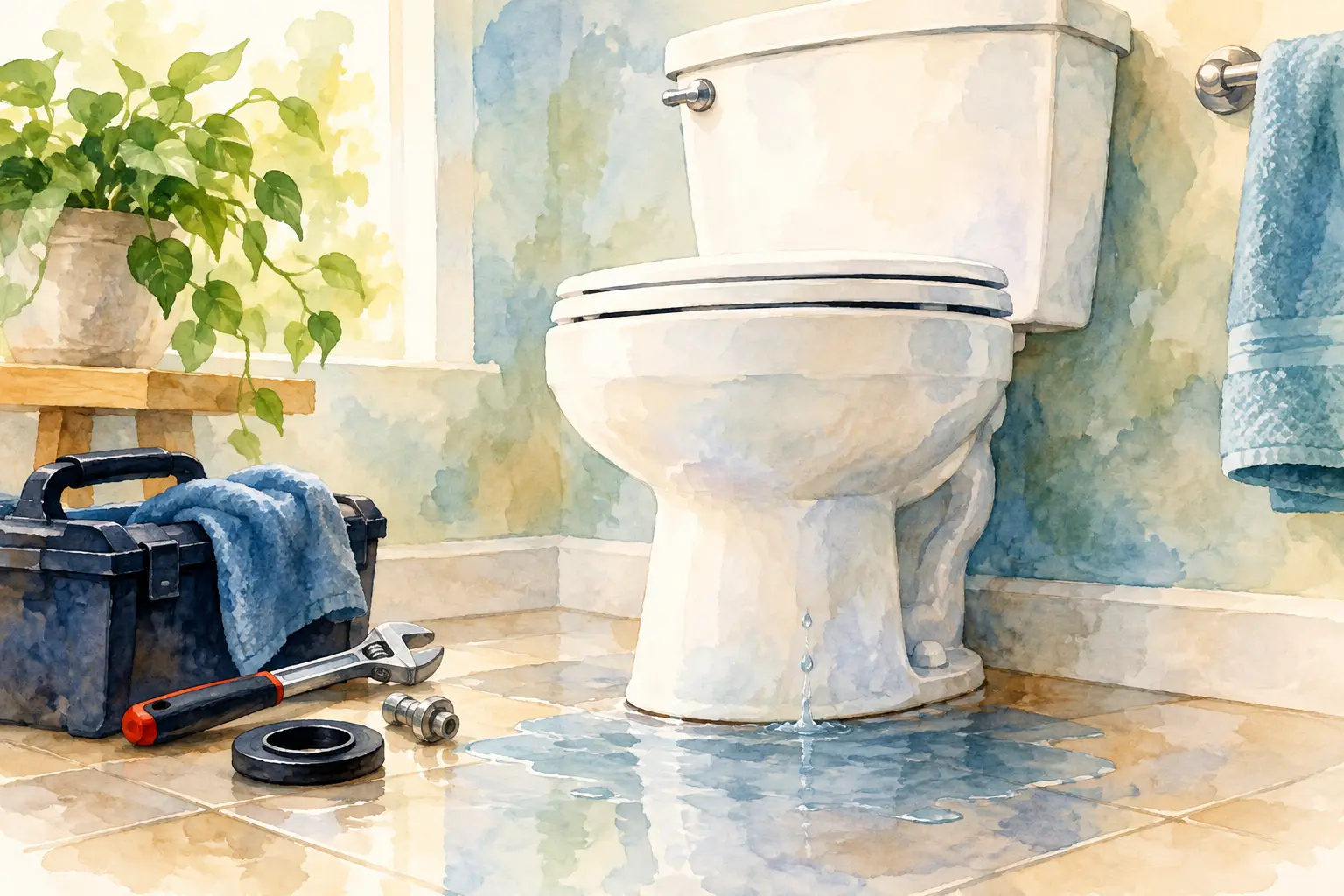
A towel around the toilet is easy to ignore for a day or two. Water under the flooring, swollen baseboards, and a damaged ceiling below are not. Knowing how to stop toilet leaks starts with finding where the water is actually coming from. A toilet can leak from the tank, the water supply, the bowl base, or inside the bowl itself, and each calls for a different fix.
The good news: many small leaks can be contained quickly. The better news: acting early gives you a much better chance of protecting your bathroom, your subfloor, and your peace of mind.
First, stop the water and protect the room
If water is actively pooling on the floor, turn off the toilet’s shutoff valve. It is usually located on the wall or floor behind the toilet, connected to the water supply line. Turn the handle clockwise until it stops. If the valve is stuck or water continues to run, remove the tank lid and lift the float inside the tank to stop the refill temporarily.
Mop up the water right away, including behind and around the toilet base. Dry the area well enough that you can see fresh water appear. This simple step helps identify the source instead of guessing.
Do not keep flushing a toilet that leaks at the base, rocks when you sit on it, or sends water onto the floor after every flush. One more flush can be all it takes to soak the flooring underneath.
How to stop toilet leaks by finding the source
A toilet leak is not always obvious. Water can travel along the outside of the bowl, down a supply line, or beneath the toilet before you notice it. Start with a dry paper towel and check one area at a time.
Water dripping from the supply line or shutoff valve
The small hose that supplies water to the toilet is a common leak point. Run a dry paper towel along the connections at both ends of the line: where it attaches to the shutoff valve and where it connects beneath the tank. If the towel comes away wet, you have found a likely source.
A loose connection may need a gentle tightening by hand, followed by a small turn with a wrench if necessary. Be careful here. Overtightening can crack a fitting or damage an aging valve. If the supply line looks rusty, bulging, cracked, or stiff, replacement is usually the safer choice than trying to nurse it along.
If the shutoff valve itself drips when turned on or off, leave the toilet water off and arrange a repair. A failed valve can turn a minor toilet problem into a larger water event quickly.
Water leaking between the tank and bowl
If water appears beneath the tank, especially after flushing, inspect the bolts and rubber seals that connect the tank to the bowl. These washers can harden over time, while metal bolts may corrode.
You may be able to carefully tighten the tank bolts a little at a time, alternating sides to keep pressure even. Never crank down on them. Porcelain can crack, and replacing a cracked tank is not a quick repair.
If tightening does not stop the drip, the tank-to-bowl gasket or bolt washers likely need replacement. This is a manageable repair for an experienced homeowner, but it requires draining the tank, removing it safely, and reinstalling it level. If the tank feels unstable or you see any hairline cracks, call a plumber rather than forcing the job.
A toilet that runs and leaks water into the bowl
A running toilet may not leave a puddle on the floor, but it is still a leak. Water silently escapes from the tank into the bowl, causing the fill valve to cycle repeatedly and adding to your water bill.
The usual culprit is the flapper, the rubber seal at the bottom of the tank. Lift the tank lid and look for water moving into the bowl after the toilet has finished filling. You can also place a few drops of food coloring in the tank, wait 15 to 20 minutes without flushing, and check whether color appears in the bowl.
If it does, replace the flapper or inspect the flush valve seat for damage. Sometimes the chain is simply too tight and keeps the flapper from closing fully. There should be a little slack in the chain when the flapper is closed. A new flapper is inexpensive, but it needs to match the toilet’s flush valve size and style. The wrong one may still leak.
Water around the toilet base
Water at the base deserves prompt attention. If it appears only after flushing, the wax ring beneath the toilet may have failed. That ring seals the connection between the toilet and the drain pipe. When it is damaged, wastewater can escape beneath the fixture and into the floor.
Before assuming the wax ring is the problem, check for condensation. In a humid bathroom, cold tank water can make the outside of the tank sweat. Condensation often creates water around the back or sides of the toilet, not just at the base. Improving ventilation, running the bathroom fan, or insulating the tank can help if sweating is the true cause.
A failed wax ring, however, is not a caulk-and-hope situation. Caulk around the base can trap leaking water underneath and hide a growing problem. The toilet needs to be removed, the old seal replaced, and the flange inspected for damage. If the toilet rocks, there may also be a leveling or flange issue that needs attention before it is reset.
A cracked tank or bowl
Porcelain cracks can be small, but they can worsen without warning. Look closely for a wet line on the outside of the tank or bowl, particularly near bolts, corners, and the waterline. A crack in the tank may leak slowly at first, while a bowl crack can compromise the fixture itself.
Do not try to repair a structural porcelain crack with adhesive as a permanent solution. It may hold briefly, but it is not dependable under the weight, pressure, and daily use a toilet handles. Shut off the water if needed and plan for replacement.
What not to do when your toilet is leaking
A leak can make anyone want a fast fix, but a few common shortcuts create more trouble than they solve. Avoid pouring chemical drain cleaner into a toilet that is leaking or backing up. These products can damage components, create a safety hazard, and make later repairs more difficult.
Also avoid repeatedly tightening every nut you can see. Toilets use porcelain, rubber, and plastic parts that can crack or deform under too much pressure. The goal is a correct diagnosis, not a tighter connection at all costs.
Finally, do not ignore a damp floor just because the leak stops between flushes. Intermittent leaks still feed moisture into flooring and framing. In Calgary homes, where dry indoor air can make a small damp spot seem less serious, hidden water damage can still develop below the surface.
When to call a plumber for a toilet leak
Call for professional help when water is coming from the base, the toilet is unstable, the shutoff valve will not close, or you see a crack in the porcelain. It is also wise to call if a repair has failed once already. Replacing a flapper is one thing. Removing a toilet, repairing a damaged flange, or tracing water that has reached the ceiling below is another.
A licensed plumber can isolate the leak, check the condition of the supply valve and drain connection, and make the repair without leaving the hidden cause behind. That is especially valuable in older homes, where worn fittings and uneven flooring may contribute to the problem.
For active flooding or wastewater on the floor, treat it as urgent. Shut off the water, keep family members away from the area, and arrange emergency plumbing service. ValveOn Plumbing coordinates 24/7 emergency dispatch for Calgary homeowners who need a clear answer and a repair that is done right.
A toilet should be one of the quietest, most dependable fixtures in your home. If it starts leaving water where it does not belong, trust what you see, act early, and choose the repair that protects your home for the long run. No shortcuts. Just solid work that stands the test of time.
Leave a Reply